Business-to-business advertising requires reaching professional decision-makers in specific industries, job functions, company sizes, and seniority levels — targeting precision that consumer-focused advertising platforms cannot match. LinkedIn Campaign Manager provides advertising access to the world’s largest professional network, enabling advertisers to precisely target specific professionals based on their verified professional attributes, job history, skills, and career progression rather than inferred interests or behavioral assumptions. With over 900 million professional members worldwide actively providing detailed self-reported career and employment information, LinkedIn offers B2B advertisers a targeting foundation built on actual professional identity rather than behavioral inference.
LinkedIn Campaign Manager is the comprehensive self-service advertising platform through which organizations of all sizes create, strategically manage, and continuously optimize paid advertising campaigns across LinkedIn’s network. While LinkedIn advertising carries higher cost-per-click and cost-per-impression rates than platforms like Google Ads or Meta Ads, the exceptional targeting precision and consistently higher lead quality that professional audience targeting delivers often justifies the premium cost for sophisticated B2B marketers and demand generation teams whose customer acquisition economics support higher per-lead costs. Deeply understanding Campaign Manager’s capabilities and limitations helps B2B marketing teams evaluate whether LinkedIn advertising deserves allocation within their demand generation budget.
Campaign Objectives
LinkedIn Campaign Manager organizes campaigns around marketing objectives that align with different stages of the B2B buying journey. Awareness objectives (Brand Awareness) maximize impressions among target audiences. Consideration objectives (Website Visits, Engagement, Video Views) drive meaningful interactions with advertising content. Conversion objectives (Lead Generation, Website Conversions, Job Applicants) focus on measurable actions that represent qualified prospect engagement. The objective-based campaign structure ensures that LinkedIn’s delivery algorithm optimizes for the specific outcome the advertiser values rather than applying generic delivery optimization.
Audience Targeting
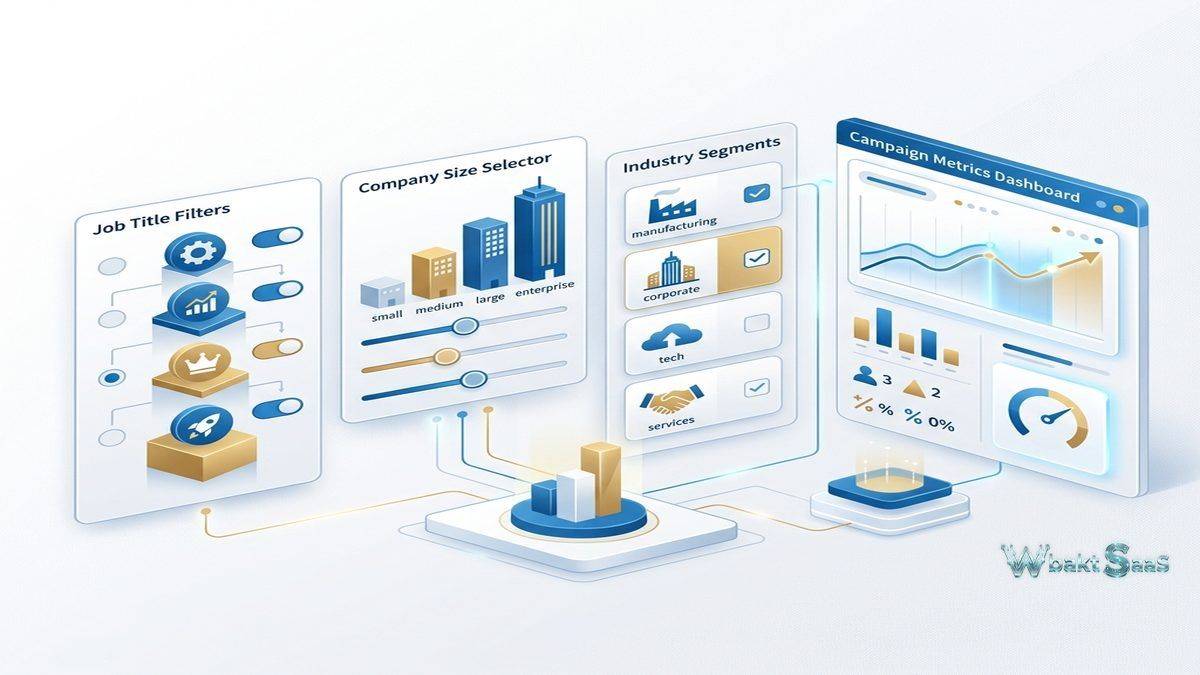
LinkedIn’s professional targeting capabilities represent the platform’s primary competitive advantage over other advertising channels. Targeting dimensions include job title, job function, seniority level, industry, company name, company size, company connections, member skills, member groups, education (school, degree, field of study), member age, member gender, geographic location, and years of experience. These professional attributes are self-reported by members during profile creation and updates, providing targeting data quality that exceeds platform-inferred interest categories.
Account-based marketing (ABM) targeting enables advertising specifically to employees of named target accounts — uploading a list of company names and delivering ads exclusively to professionals at those organizations. For B2B organizations pursuing named-account strategies, this targeting capability enables precision that no other advertising platform can match. Combined with job function and seniority filters, ABM targeting reaches specific decision-maker personas at specific target companies.
Matched Audiences expand targeting beyond LinkedIn’s native attributes. Contact Targeting uploads email lists to match against LinkedIn member profiles. Company Targeting uploads company lists for account-based advertising. Website Retargeting reaches LinkedIn members who previously visited the advertiser’s website. Lookalike Audiences find LinkedIn members who share characteristics with existing customers or high-value audiences. These matched audience capabilities connect LinkedIn advertising with the advertiser’s own customer data for targeting informed by actual business relationships.
Audience exclusions prevent wasting impressions on inappropriate audiences — excluding current customers from acquisition campaigns, excluding competitors from product campaigns, or excluding junior professionals from executive-targeted content. Audience forecasting estimates the size of configured target audiences, helping advertisers balance targeting precision against audience scale.

Ad Formats
Sponsored Content: Native feed ads that appear in the LinkedIn feed alongside organic content. Available as single image ads, video ads, carousel ads (multiple swipeable images), and document ads (PDF/slideshow content that members browse within the feed). Sponsored Content provides the highest visibility format for reaching professionals during their regular LinkedIn browsing.
Sponsored Messaging: Message Ads and Conversation Ads delivered directly to LinkedIn member inboxes. Message Ads deliver targeted messages with a single call-to-action. Conversation Ads provide interactive message experiences with multiple response paths that guide prospects through self-selected content journeys. Messaging ads deliver high engagement rates but are subject to frequency caps that limit how often individual members receive sponsored messages.
Text Ads: Simple text-based ads with small images displayed in the right rail and top banner of the LinkedIn desktop interface. Text Ads offer the lowest cost-per-click option but generate lower engagement rates than feed-based formats. They serve budget-conscious campaigns where broad professional awareness matters more than deep engagement.
Dynamic Ads: Personalized ads that automatically incorporate the viewing member’s profile photo, name, and job title into the ad creative. Follower Ads encourage company page following. Spotlight Ads drive traffic to landing pages with personalized creative. The personalization creates attention-grabbing ads that feel individually addressed rather than generically broadcast.
Lead Gen Forms
LinkedIn Lead Gen Forms provide in-platform lead capture that pre-populates form fields with information from the member’s LinkedIn profile — name, email, company, job title, phone number. This pre-population dramatically reduces form friction compared to website-based landing pages where prospects must manually enter information. The reduced friction typically increases conversion rates significantly compared to driving traffic to external landing pages with manual-entry forms.
CRM integrations automatically sync captured leads with Salesforce, HubSpot, Microsoft Dynamics, Marketo, and other marketing automation platforms, ensuring that LinkedIn-generated leads enter the sales pipeline immediately without manual data transfer. Lead quality scoring based on targeting criteria and engagement signals helps sales teams prioritize outreach to the most qualified leads.
Conversion Tracking
The LinkedIn Insight Tag — a JavaScript pixel installed on the advertiser’s website — enables conversion tracking, website retargeting, and website audience demographics. Conversion tracking measures actions that occur on the advertiser’s website after LinkedIn ad interactions — form submissions, content downloads, demo requests, purchases — providing attribution data that connects LinkedIn advertising spend with downstream business outcomes.
Offline conversion tracking imports CRM conversion data back into Campaign Manager, attributing offline conversions (phone calls, in-person meetings, closed deals) to LinkedIn ad impressions and clicks. This offline attribution is particularly valuable for B2B organizations where the buying cycle extends weeks or months beyond the initial ad interaction and final conversion happens through sales interactions rather than website self-service.
Budget and Bidding
Campaign budgets can be configured as daily budgets (spending limits per day) or lifetime budgets (total spending limits for the campaign duration). Bidding strategies include maximum delivery (automated bidding optimized for spending the full budget efficiently), cost cap (targeting a specific cost-per-result), and manual bidding (setting specific bid amounts for individual auctions). Campaign scheduling controls when ads are delivered — all day, specific hours, or specific days of the week. Understanding bidding strategy selection is critical for LinkedIn advertising optimization, as the choice between automated and manual bidding significantly affects both campaign spending efficiency and result quality.
Analytics and Reporting
Campaign analytics track performance metrics including impressions, clicks, click-through rate, social actions (likes, comments, shares), conversions, cost-per-click, cost-per-impression, cost-per-lead, and return on ad spend. Audience demographics reporting shows who actually sees and engages with ads — job functions, seniority levels, industries, company sizes — enabling verification that targeting configuration reaches the intended audience.
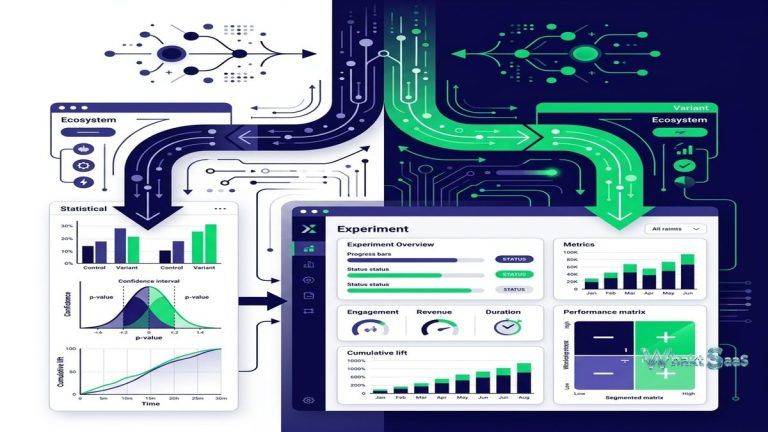
A/B testing capabilities compare ad creative variations, targeting configurations, and bidding strategies within campaigns, identifying which combinations deliver the strongest performance. Revenue attribution reporting connects LinkedIn advertising spend with pipeline and revenue data from CRM integrations, providing ROI measurement that spans the full B2B buying cycle.
Campaign Groups
Campaign Groups organize related campaigns under shared budget constraints and scheduling parameters. A demand generation initiative might include separate campaigns for awareness content, consideration content, and conversion-focused lead generation — each targeting different audiences with different creative but managed under a unified budget that prevents any single campaign from consuming disproportionate spending. Campaign Group reporting aggregates performance across member campaigns, providing initiative-level measurement that individual campaign metrics cannot deliver.
LinkedIn Audience Network
The LinkedIn Audience Network extends Sponsored Content delivery beyond LinkedIn to partner websites and apps, reaching LinkedIn members while they browse content outside the LinkedIn platform. Audience Network expands campaign reach without diluting targeting precision, as ads are still delivered to the same LinkedIn-defined audience segments. Advertisers can enable or disable Audience Network delivery per campaign based on whether expanded reach or LinkedIn-only placement better serves their campaign objectives.
Document Ads
Document Ads allow advertisers to share downloadable content — white papers, case studies, research reports, product guides — directly within the LinkedIn feed. Members can preview document content within the feed before downloading, reducing friction in content-based demand generation. Lead Gen Forms can gate document downloads, capturing lead information in exchange for full document access. This format combines content marketing and lead generation in a single ad experience, serving the common B2B tactic of offering valuable content in exchange for contact information.
Event Ads
LinkedIn Event Ads promote LinkedIn Events — webinars, virtual conferences, in-person events, and workshops — with event-specific creative formats that display event details, date, time, and one-click registration. Event targeting leverages LinkedIn’s professional attributes to reach professionals whose job functions, industries, and interests align with the event’s content focus. Event analytics track registrations, attendance, and post-event engagement, measuring the full event marketing funnel from ad impression through attendance.
Brand Safety
LinkedIn’s professional context provides inherent brand safety advantages compared to consumer social media platforms and programmatic display networks. Content on LinkedIn is predominantly professional and business-focused, reducing the risk of brand adjacency issues that concern advertisers on platforms where user-generated content varies widely in quality and appropriateness. Additional brand safety controls allow advertisers to exclude specific content categories and block specific publishers within the Audience Network.
Integrations and API
The LinkedIn Marketing API enables programmatic campaign creation, management, and reporting for organizations and agencies managing campaigns at scale. API access supports automated campaign optimization, custom reporting dashboards, and integration with marketing technology platforms that centralize multi-channel advertising management.
CRM integrations synchronize lead data with Salesforce, HubSpot, Microsoft Dynamics, Marketo, Eloqua, and other marketing automation platforms. These integrations ensure that LinkedIn-generated leads enter existing nurturing workflows, sales assignment processes, and pipeline tracking systems without manual data transfer. Offline conversion import closes the attribution loop by connecting downstream sales outcomes with upstream LinkedIn advertising activity.
LinkedIn Pages serve as the organic presence foundation that complements paid advertising. Organizations use Company Pages to publish organic content, build follower audiences, and establish professional credibility that paid campaigns can amplify. The interplay between organic content strategy and paid amplification creates a compound effect where paid promotion builds the audience that sustains organic content reach between paid campaign flights.
Common Use Cases
Demand Generation: B2B marketing teams use LinkedIn advertising to generate qualified leads through targeted content promotion, lead gen form campaigns, and event registration promotion aimed at specific professional audiences.
Account-Based Marketing: Sales and marketing teams target specific high-value accounts with tailored advertising that reaches decision-makers at named target companies, supporting personalized ABM engagement strategies that align advertising with sales outreach timing.
Thought Leadership: Organizations promote thought leadership content — research reports, industry analysis, executive perspectives — to build brand credibility and awareness among professional audiences in their industry. Consistent thought leadership promotion establishes the organization as a recognized authority in its domain.
Talent Acquisition: HR and talent teams use LinkedIn advertising to promote job opportunities, employer brand content, and career-related messaging to professionals with specific skills and experience profiles.
Event Promotion: Organizations promote webinars, conferences, workshops, and industry events to targeted professional audiences who match the event’s ideal attendee profile, driving registrations through lead gen forms or event landing pages.
Product Launches: Technology companies use LinkedIn advertising to announce new products, features, and services to professionals in their target industries and job functions. Sponsored content with product demonstrations, case studies, and trial offers drives awareness and initial adoption among the professional audience most likely to evaluate and purchase the product.
Partner Marketing: Channel marketing teams promote partner programs, joint solutions, and co-marketing content to professionals at potential partner organizations. LinkedIn’s company targeting enables precise partner recruitment advertising that reaches decision-makers at organizations with complementary capabilities.
Pricing
LinkedIn advertising operates on an auction-based pricing model with minimum daily budgets that vary by market. Average costs-per-click typically range significantly higher than other digital advertising platforms, reflecting the premium professional audience access. Campaign Manager provides cost estimates during campaign setup based on targeting configuration and competitive demand for the selected audience segments.
Advertising costs vary based on targeting, bidding strategy, competition, and market conditions. Please verify current pricing structures on the official LinkedIn Campaign Manager platform before making advertising investment decisions.
Limitations
- Higher costs: LinkedIn advertising costs significantly more per click and per impression than most other digital advertising platforms, reflecting the premium professional audience access.
- B2B focus: The platform’s professional targeting strengths serve B2B advertisers primarily. B2C campaigns typically find better value on consumer-focused platforms.
- Creative limitations: Ad format options and creative customization are more limited than platforms like Meta Ads or Google Display Network.
- Audience scale: Professional targeting filters can produce small audience sizes that limit delivery volume, particularly for niche industries or specialized roles.
- Attribution complexity: Long B2B sales cycles make attribution challenging, as months may pass between initial ad interaction and final purchase decision.
Summary
LinkedIn Campaign Manager provides B2B advertisers with professional audience targeting precision that no other advertising platform can match. The combination of self-reported professional attributes, account-based targeting, lead gen forms with profile pre-population, and CRM integration creates an advertising ecosystem specifically designed for B2B demand generation. While the higher cost-per-interaction reflects the premium audience access, the lead quality and targeting precision often deliver favorable cost-per-qualified-lead economics that justify the premium investment.
The platform’s value correlates directly with the advertiser’s customer acquisition economics. Organizations with high customer lifetime values, long sales cycles, and complex buying committees — enterprise software companies, professional services firms, financial services providers — typically extract the strongest ROI from LinkedIn advertising because their revenue-per-customer supports the higher per-lead acquisition costs. Organizations with lower customer lifetime values may find the cost-per-lead economics challenging on LinkedIn compared to lower-cost advertising platforms.
LinkedIn’s continued investment in advertising capabilities — enhanced targeting, new ad formats, improved attribution, and expanded audience network — reflects the growing recognition that professional audience access commands a premium in the digital advertising market. As B2B buying processes increasingly involve online research and digital engagement, LinkedIn’s position as the primary professional networking platform ensures its continued relevance in B2B advertising strategies.
B2B advertising platforms including LinkedIn Campaign Manager, Google Ads, Meta Ads, and programmatic display each serve distinctly different aspects of the B2B marketing mix. LinkedIn’s advantages center on professional targeting precision, lead quality, and account-based marketing capabilities. Organizations evaluating B2B advertising channels should consider their target audience characteristics, customer acquisition economics, and campaign objectives when allocating budget across available platforms.
Features, pricing, and availability discussed in this review reflect information available at the time of writing. Software products evolve continuously, and details may have changed since publication. Please verify current information directly on the official LinkedIn Campaign Manager website. WBAKT SaaS is an independent review platform with no affiliate relationships with any software company mentioned in this article.
For related marketing and advertising tools, see our reviews of HubSpot Marketing Hub, Google Analytics 4, and Sprout Social dashboard.
About the Author