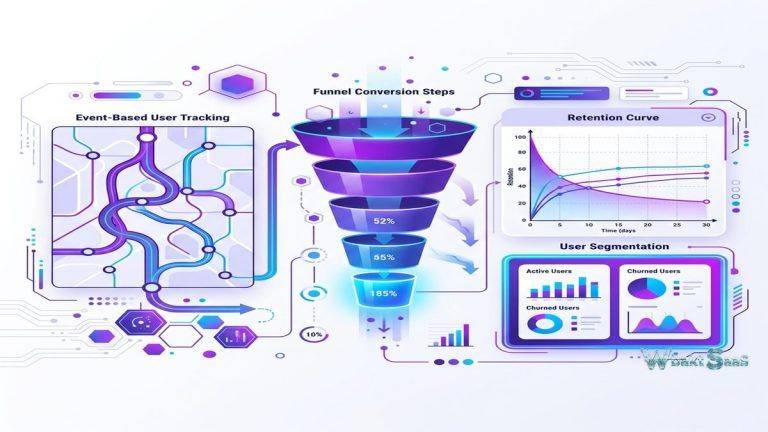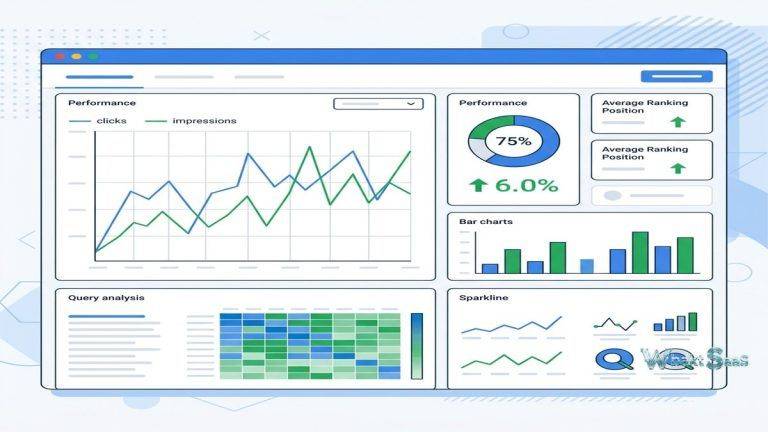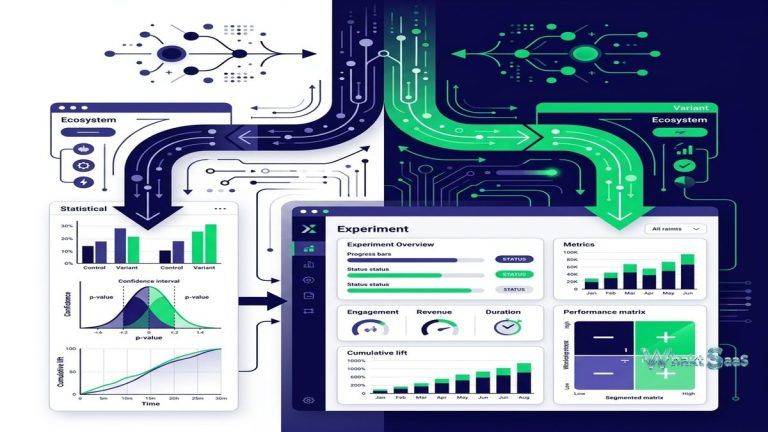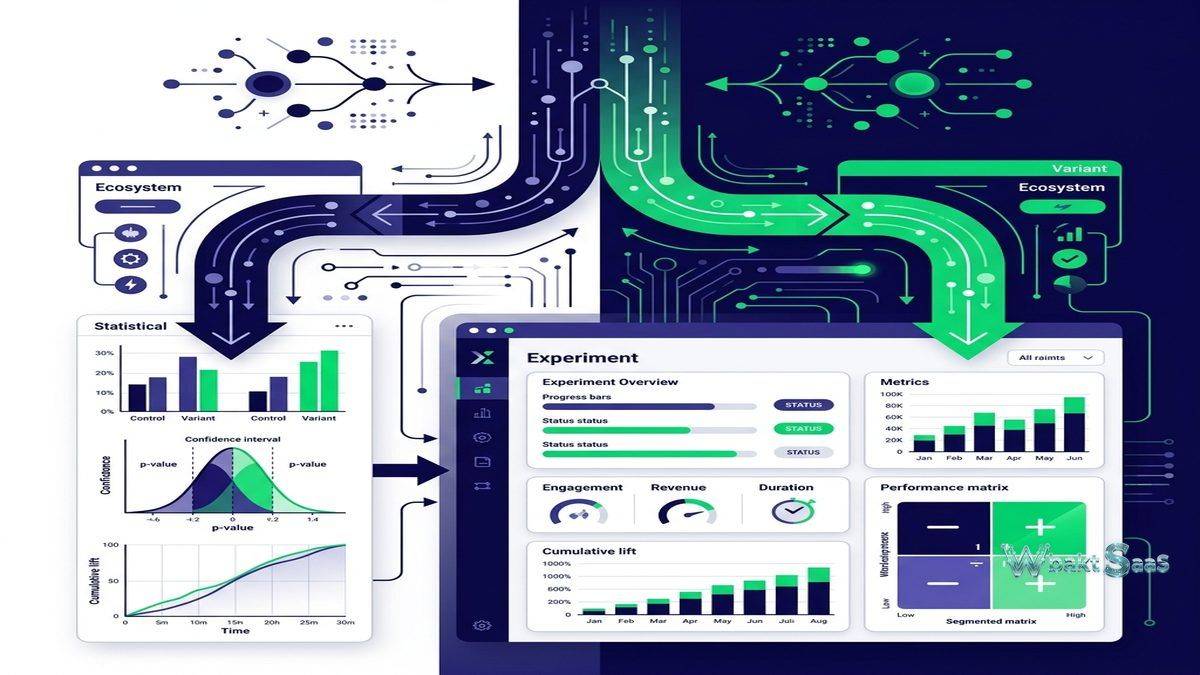
Data-driven website optimization requires more than analytics dashboards and traffic reports — it fundamentally requires the organizational ability to systematically test proposed changes, measure their impact on business metrics, and implement winning variations with confidence. Visual Website Optimizer (VWO) provides a comprehensive experimentation platform that enables marketing teams, product managers, and conversion rate optimization specialists to test website changes using rigorous statistical methodology, ensuring that all design decisions, copy changes, layout modifications, and user experience modifications are rigorously validated by actual visitor behavior data before permanent implementation.
Founded in 2010 by Wingify, VWO has evolved from a focused A/B testing tool into a full-stack experimentation and optimization platform that encompasses testing, behavioral insights, personalization, and deployment. The platform serves organizations ranging from growing startups to Fortune 500 enterprises across industries including SaaS, e-commerce, media, and financial services. Understanding VWO’s capabilities helps organizations evaluate whether dedicated experimentation tooling can improve their website performance beyond what intuition-driven design decisions can achieve and whether VWO’s approach to experimentation serves their optimization maturity level.
A/B Testing
VWO’s A/B testing enables creating controlled experiments that compare two or more page variations against each other to determine which version produces better conversion outcomes. The testing engine randomly assigns incoming visitors to different variations, ensuring that external factors (time of day, traffic source, device type) are equally distributed across variations and do not skew results. This randomized controlled experiment methodology provides the statistical rigor needed to confidently attribute performance differences to the tested changes rather than to external variables.
Test creation supports modifying virtually any element of a webpage: headlines, images, button text, button colors, page layouts, navigation structures, pricing displays, form designs, social proof placement, and call-to-action configurations. Multiple goals can be tracked simultaneously per test — primary conversion goals (purchases, signups, form submissions) alongside secondary engagement metrics (time on page, scroll depth, page views) — providing comprehensive understanding of how changes affect the full spectrum of visitor behavior.
Visual Editor
VWO’s visual editor enables creating test variations through a point-and-click interface that requires no coding knowledge. The editor renders the live website within a visual editing canvas where elements can be modified by clicking and editing — changing text, swapping images, modifying colors, adjusting sizes, hiding elements, or rearranging page sections. This visual approach makes experimentation accessible to marketing teams, designers, and product managers who can create and launch tests without developer involvement.
For changes that exceed the visual editor’s capabilities — complex layout restructuring, dynamic content insertion, custom interaction behaviors — VWO supports custom code injection using HTML, CSS, and JavaScript. This hybrid approach serves both non-technical teams who need rapid test creation and technical teams who need the flexibility to implement complex experimental variations that visual editors cannot produce.

Multivariate Testing
Multivariate testing (MVT) tests multiple page elements simultaneously, identifying the optimal combination of element variations. While A/B testing compares complete page versions, MVT isolates the individual and combined contribution of each modified element — for example, testing three headline options, two image options, and two button color options simultaneously to find the best combination from all possible combinations. Full factorial MVT tests every possible combination, while fractional factorial MVT tests a representative subset to reach conclusions faster with less traffic.
Split URL Testing
Split URL testing compares two entirely different page designs hosted at different URLs. Unlike A/B testing where variations are created within VWO by modifying elements of an existing page, split URL testing redirects portions of traffic to fundamentally different page designs — a complete redesign, a different page architecture, or a page built with a different technology stack. This testing type serves major redesign decisions where modifications are too extensive to implement through the visual editor or code injection on the original page.
Statistical Engine
VWO’s Bayesian statistical engine provides test results that are more intuitive and actionable than traditional frequentist approaches used by many competing tools. The Bayesian approach calculates the probability that each variation is the best performer and the expected improvement range, providing clear guidance on whether a variation is likely to improve conversion rates and by how much. This probability-based reporting helps stakeholders make deployment decisions with explicit understanding of the confidence level and expected impact range.
Smart Stats continuously monitors test results and adjusts confidence levels as data accumulates, providing accurate early indications while preventing false positive declarations that plague traditional fixed-horizon tests. The statistical methodology accounts for multiple testing corrections, seasonal effects, and the peeking problem (checking results before sufficient data accumulates) that commonly lead to incorrect conclusions in less rigorous testing tools.
Heatmaps
VWO Insights includes click heatmaps, scroll heatmaps, and attention heatmaps that visualize how visitors interact with web pages. Click heatmaps show where visitors click most frequently, revealing which page elements attract attention and engagement. Scroll heatmaps show how far visitors scroll down pages, identifying the content fold — the point where significant visitor drop-off occurs — and showing which page sections receive the most visual exposure.
Dynamic heatmaps track interactions with dynamic page elements including dropdown menus, tab content, modal windows, and accordion sections that traditional static heatmaps cannot capture. Segmented heatmaps filter interaction data by visitor attributes — new vs. returning visitors, device type, traffic source — revealing how different visitor segments interact with pages differently.
Session Recordings
Session recordings capture individual visitor sessions as video recordings that show mouse movements, clicks, scrolls, and page navigation in real time. Watching session recordings reveals qualitative insights that quantitative data cannot capture — visitors struggling with confusing navigation, abandoning forms due to unclear field labels, clicking elements that are not interactive, or scrolling past important content without noticing it.
Recording filters identify sessions by conversion status (converted vs. abandoned), page visits, session duration, visitor segments, and specific interaction events. These filters enable targeted session review — watching only sessions where visitors abandoned the checkout process, for example — to efficiently identify the specific friction points that cause conversion failures.
Surveys and Feedback
On-page surveys collect visitor feedback directly on the website through configurable survey widgets — embedded surveys, slide-in surveys, feedback buttons, or post-conversion surveys. Survey questions can be open-ended text responses, multiple choice, rating scales, or Net Promoter Score (NPS) formats. Triggering rules display surveys based on visitor behavior — time on page, exit intent, specific page views, conversion events — ensuring that feedback collection reaches visitors at relevant moments without disrupting the browsing experience unnecessarily.
Form Analytics
VWO Form Analytics tracks how visitors interact with forms — which fields cause hesitation, which fields have the highest error rates, which fields cause form abandonment, and how long visitors spend on each field. This field-level interaction data reveals specific form optimization opportunities: removing unnecessary fields, clarifying confusing field labels, reordering fields for logical flow, and providing better validation feedback. For organizations where form submissions drive revenue — lead generation forms, checkout forms, registration forms — form analytics provides direct conversion improvement opportunities.
Personalization
VWO Personalize enables delivering different page experiences to different visitor segments based on behavioral characteristics, geographic location, device type, referral source, and custom-defined segments. Personalization campaigns apply variations automatically to matching visitors without the traffic-splitting experiment methodology of A/B tests. Rather than finding the single best version for all visitors, personalization serves the optimal experience for each identified visitor segment simultaneously.
Deployment
VWO Deploy enables deploying test-winning variations permanently without requiring development team changes to production code. After an experiment identifies a winning variation, Deploy maintains the winning changes through VWO’s client-side script until the development team implements the changes natively. This capability prevents the common experimentation bottleneck where winning test results sit in a backlog waiting for development implementation, allowing optimization gains to compound faster.
Integrations
VWO integrates with analytics platforms (Google Analytics 4, Adobe Analytics, Mixpanel), marketing automation tools (HubSpot, Marketo, Salesforce), and customer data platforms. Test data can be pushed to analytics tools for deeper analysis alongside other behavioral data, and audience segments from integrated platforms can be used for test targeting in VWO. Webhook integrations enable custom data flows to proprietary systems and databases.
Server-Side Testing
VWO’s server-side testing enables running experiments on the server before page content is delivered to visitors, eliminating the page flickering and latency that client-side testing sometimes introduces. Server-side testing is essential for experiments that involve backend logic changes — pricing algorithms, recommendation engine modifications, search result ranking changes, and API response variations that cannot be implemented through frontend modifications. SDKs are available for Java, Python, Ruby, PHP, Node.js, and other server-side languages.
Server-side testing provides better performance characteristics for mobile apps and single-page applications where client-side script injection may conflict with application frameworks or introduce rendering inconsistencies. The full-stack testing approach combines client-side and server-side capabilities, enabling experimentation across the entire technology stack rather than limiting tests to frontend visual changes.
Feature Flags
VWO Feature Flags enable controlling feature releases independently of code deployment. Feature flags allow development teams to deploy code containing new features to production while keeping those features hidden from users until they are ready for release. Gradual rollout progressively exposes new features to increasing percentages of users, monitoring performance and stability metrics at each stage before expanding to the full user base. This controlled release approach reduces the risk of feature launches by providing the ability to quickly disable problematic features without requiring emergency code deployment.
Program Management
VWO Plan provides experimentation program management capabilities including hypothesis documentation, experiment prioritization frameworks (ICE, PIE scoring), experiment queuing, and cross-team collaboration features. Program management features help organizations move beyond ad-hoc testing toward systematic experimentation programs with documented hypotheses, structured prioritization, and institutional learning from experiment results. Experiment archives serve as organizational knowledge repositories, preventing repeated testing of previously validated or invalidated hypotheses.
Data Security and Privacy
VWO complies with GDPR, CCPA, and HIPAA data protection requirements, providing data processing agreements, consent management integration, and data residency options for organizations operating under strict data governance requirements. Visitor data anonymization options prevent the collection or storage of personally identifiable information in heatmaps and session recordings. EU data hosting is available for organizations with geographic data residency requirements.
VWO API
The VWO API provides programmatic access to experiment creation, management, and reporting, enabling automated experimentation workflows and custom reporting integrations. Enterprise organizations use the API to integrate VWO data into their business intelligence platforms, automate experiment reporting, and build custom experimentation dashboards that combine VWO results with other marketing and product metrics.
Common Use Cases
Conversion Rate Optimization: CRO teams run continuous experimentation programs on landing pages, product pages, checkout flows, and signup processes to systematically improve conversion rates through iterative testing and data-driven decision making.
Website Redesign Validation: Organizations validate major design changes through testing before full deployment, ensuring that redesigned pages perform better than originals rather than assuming that newer designs automatically outperform existing ones.
Pricing Page Optimization: SaaS companies test pricing page layouts, plan naming, feature descriptions, pricing display formats, and call-to-action configurations to maximize plan selection and upgrade conversion rates.
E-commerce Product Pages: Online retailers test product page elements — image sizes, description formats, review display, add-to-cart button placement, cross-sell recommendations — to maximize product page conversion and average order value.
User Experience Research: Product teams combine heatmaps, session recordings, and surveys to understand qualitative user behavior patterns that inform hypothesis generation for subsequent A/B testing experiments.
Pricing
VWO offers modular pricing where organizations can subscribe to specific capabilities — Testing, Insights (heatmaps, recordings, surveys), Personalize, and Deploy — individually or as bundled plans. This modular approach allows organizations to start with testing alone and add behavioral insights, personalization, or deployment capabilities as their experimentation maturity grows.
Pricing and features are subject to change. Please verify current plan details on the official VWO website before making purchasing decisions.
Limitations
- Traffic requirements: Statistically significant test results require sufficient traffic volume. Low-traffic websites may need to run tests for extended periods before reaching conclusive results.
- Client-side flickering: Client-side testing can introduce brief visual flickering where the original page renders before the variation loads. Anti-flicker techniques and server-side testing mitigate this issue.
- Implementation complexity: Full-stack testing features and server-side SDKs require technical implementation expertise that exceeds what non-technical teams can manage independently.
- Pricing transparency: Enterprise pricing is not publicly listed and requires sales consultation, making initial cost evaluation difficult for prospective customers.
- Learning curve: While the visual editor is accessible, advanced features like multivariate testing, server-side implementation, and statistical interpretation require significant experimentation expertise.
Summary
VWO provides a comprehensive experimentation platform that addresses the full optimization workflow — from behavioral insight gathering through hypothesis testing to winning variation deployment. The combination of A/B testing, multivariate testing, heatmaps, session recordings, surveys, form analytics, personalization, and deployment capabilities in a single platform reduces the tool fragmentation that organizations often experience when assembling experimentation capabilities from multiple point solutions.
The platform’s Bayesian statistical engine provides more intuitive and actionable test results than traditional frequentist approaches, helping organizations make better deployment decisions with clearer understanding of confidence levels and expected impact ranges. Smart Stats’ ability to prevent common statistical errors — peeking problems, premature winner declarations, and multiple testing errors — protects organizations from implementing changes that appear to win tests but actually reflect statistical noise rather than genuine improvements.
VWO’s modular architecture allows organizations to adopt experimentation capabilities incrementally, starting with testing alone and adding behavioral insights, personalization, and deployment as their optimization maturity grows. This progressive adoption path accommodates organizations at different stages of their experimentation journey — from teams running their first A/B tests to mature programs conducting dozens of simultaneous experiments with advanced statistical methodology and cross-functional collaboration.
The ROI of experimentation compounds over time. Each successful experiment produces a measurable conversion improvement that remains active indefinitely. Organizations that maintain continuous testing programs accumulate compounding optimization gains — a series of experiments that each improve conversion by 2-5% produces dramatic cumulative improvement over the course of a year. VWO’s full-stack platform supports this continuous optimization by providing the tools, insights, and deployment capabilities needed to sustain high-velocity experimentation programs.
Experimentation platforms including VWO, Optimizely, Google Optimize (sunset), AB Tasty, and Kameleoon each approach website optimization with different technical architectures and feature emphases. VWO’s advantages center on its integrated full-stack approach, Bayesian statistical methodology, behavioral insights capabilities, and the deployment feature that bridges the gap between experiment conclusions and production implementation. Organizations evaluating experimentation platforms should consider their testing maturity, traffic volumes, technical capabilities, and the breadth of optimization activities they intend to pursue.
Features, pricing, and availability discussed in this review reflect information available at the time of writing. Software products evolve continuously, and details may have changed since publication. Please verify current information directly on the official VWO website. WBAKT SaaS is an independent review platform with no affiliate relationships with any software company mentioned in this article.
For related analytics and optimization tools, see our reviews of Hotjar user analytics, Google Analytics 4, and Unbounce landing pages.
About the Author