Managing a social media presence across multiple platforms creates operational complexity that grows with each additional network. Each platform has its own posting interface, optimal content formats, engagement patterns, analytics dashboards, and audience demographics. Without centralized management, social media teams alternate between platform-native interfaces, lose consistency in posting schedules, struggle to maintain unified brand voice, and spend excessive time on the mechanical tasks of publishing content rather than the strategic work of creating it. Hootsuite addresses this fragmentation by providing a centralized dashboard for managing social media publishing, engagement, analytics, and advertising across multiple platforms from a single interface.
Founded in 2008 as a Twitter management tool, Hootsuite has expanded to support Facebook, Instagram, LinkedIn, Pinterest, YouTube, TikTok, and Twitter/X, serving organizations from individual creators to enterprise marketing teams with thousands of social accounts. The platform’s longevity in the rapidly evolving social media landscape reflects its continuous adaptation to new platforms, changing API capabilities, and evolving organizational needs for social media governance. Understanding Hootsuite’s current capabilities and positioning helps organizations evaluate whether this platform meets their social media management requirements or whether alternative solutions better fit their workflow.
Content Scheduling and Publishing
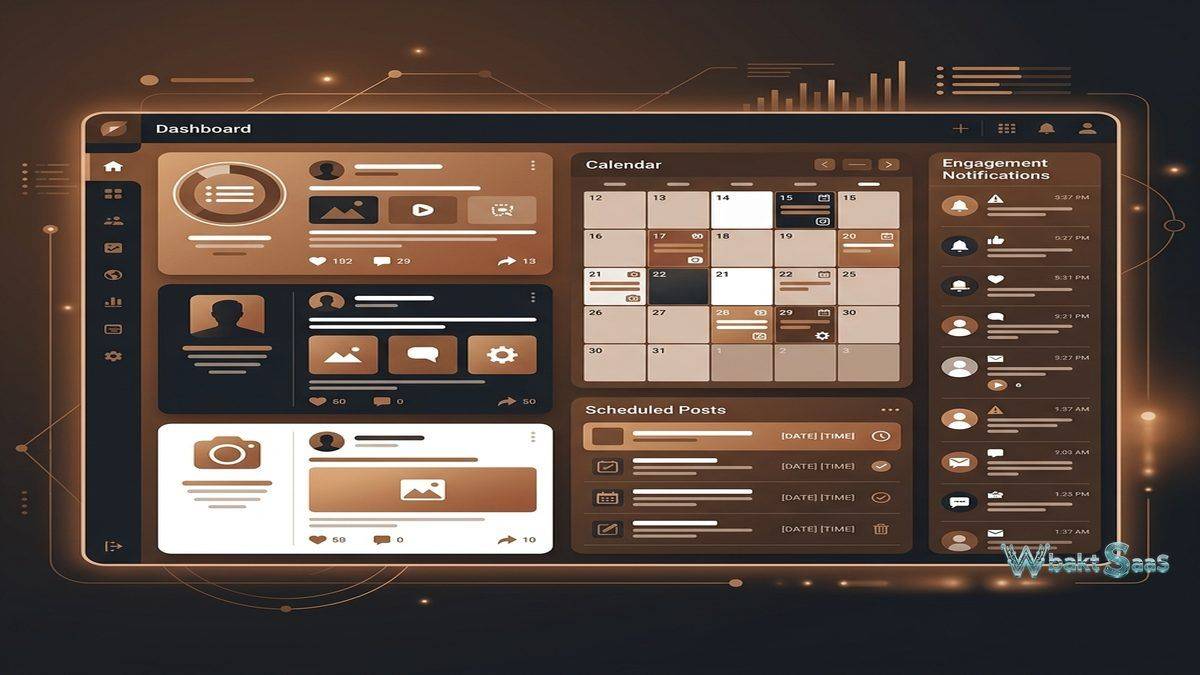
Hootsuite’s core capability is content scheduling across multiple social networks from a unified interface. The Composer tool creates posts for one or multiple platforms simultaneously, adapting content for each network’s specifications — character limits, image dimensions, video requirements, and hashtag strategies. Posts can be published immediately, scheduled for specific future times, or queued for automatic distribution based on optimal posting time recommendations.
The Content Calendar provides a visual overview of scheduled content across all connected social accounts, displaying posts on a day/week/month calendar view. This calendar perspective reveals scheduling gaps, content distribution patterns, and publishing frequency across networks — information that is difficult to assess when managing each platform’s scheduling independently. Drag-and-drop rescheduling allows quick timeline adjustments without recreating posts.
Bulk scheduling enables uploading CSV files containing multiple posts with scheduling parameters, significantly accelerating content deployment for campaigns with many pre-planned posts. Content libraries store pre-approved images, videos, and text snippets that team members can access when creating posts, maintaining brand consistency and reducing the time spent searching for approved assets.
Best Time to Publish recommendations analyze historical engagement data for each connected account, suggesting posting times when the audience is most active and engaged. These recommendations adapt to each platform and account’s specific audience patterns rather than applying generic best-time guidance that ignores the unique characteristics of different follower bases.
Social Inbox and Engagement
The Social Inbox consolidates messages, mentions, comments, and engagement notifications from all connected platforms into a unified stream. Social media managers respond to audience interactions from a single interface rather than monitoring each platform’s native notification system separately. This consolidation reduces response time, prevents missed messages, and provides a comprehensive view of audience communication across all social channels.
Message assignment routes incoming messages and mentions to specific team members based on content type, language, sentiment, or custom rules. A customer complaint might route to the support team, a product question might route to the sales team, and a partnership inquiry might route to the business development team. This intelligent routing ensures that social media interactions reach the team members best equipped to respond appropriately.
Saved replies provide templated responses for common questions and scenarios, maintaining consistency in brand voice while accelerating response time for frequently asked questions. Templates can be customized before sending, balancing efficiency with personalization. Auto-moderation rules can automatically hide or flag comments containing specific keywords, helping manage comment sections on high-traffic posts where manual moderation would be impractical.

Analytics and Reporting
Hootsuite Analytics tracks performance metrics across all connected social accounts, including follower growth, engagement rates, reach, impressions, click-through rates, video views, and audience demographics. Cross-platform performance comparisons reveal which networks deliver the strongest results for specific content types, informing resource allocation decisions across the social media portfolio.
Custom report building creates branded reports with selected metrics, date ranges, and visualizations for stakeholder communication. Report templates cover common reporting scenarios — weekly performance summaries, monthly executive reports, campaign post-mortems — and scheduled report delivery automates recurring report generation and distribution. Competitive benchmarking compares social performance against industry averages and specific competitor accounts, providing context for performance assessment beyond internal trend analysis.
Post-level analytics identify which specific content pieces drive the highest engagement, reach, and conversions. Content performance patterns — which topics, formats, posting times, and creative approaches generate the strongest audience response — emerge from post-level data analysis and inform future content strategy. This performance feedback loop enables continuous optimization of social media content based on evidence rather than assumption.
ROI tracking connects social media activity to business outcomes by measuring link clicks, website traffic generated from social posts, and conversion events triggered by social referrals. When integrated with Google Analytics or other web analytics platforms, social media managers can demonstrate the business impact of their social media programs beyond vanity metrics like follower counts and impressions — connecting social activity to website visits, lead generation, and revenue outcomes that stakeholders care about.
Influencer identification features surface social media accounts that frequently engage with or mention the brand, highlighting potential advocacy and partnership opportunities. Understanding which external voices amplify brand messages helps marketing teams identify influential supporters and develop relationships that extend organic reach through authentic third-party endorsement.
Audience demographics analysis reveals the characteristics of each social account’s following — age distribution, gender breakdown, geographic concentration, and interest categories. These audience insights inform content strategy by confirming whether the actual audience matches the intended target audience. Demographic disparities between the target and actual audience may indicate content strategy adjustments or platform selection changes needed to reach the desired audience effectively.
Social Listening
Hootsuite’s social listening capabilities monitor conversations across social platforms for brand mentions, competitor mentions, industry keywords, and trending topics. Listening streams track specific terms, hashtags, and accounts, providing real-time visibility into relevant conversations that the organization should be aware of or participate in.
Sentiment analysis classifies mentions and conversations as positive, negative, or neutral, providing aggregate sentiment trending that reveals how public perception shifts over time in response to campaigns, product launches, industry events, or crisis situations. Early detection of negative sentiment trends enables proactive response before minor issues escalate into significant brand reputation challenges.
Competitive listening monitors competitor social activity, audience reactions, and share of voice within industry conversations. Understanding competitor social strategy — which content formats they use, which topics they address, how their audience responds — provides strategic intelligence for differentiating the organization’s own social media approach.
Trend monitoring identifies emerging topics and conversations rapidly gaining strong momentum across social platforms, enabling organizations to participate in relevant trending discussions while they are still growing rather than joining conversations after they have peaked. Real-time trend alerts help social media managers identify opportunities for timely, relevant content creation that connects brand messaging with topics their audience is actively discussing, a practice commonly known as newsjacking when executed skillfully.
Team Collaboration
Hootsuite supports multi-user collaboration with role-based permissions that control what each team member can do within the platform. Content approval workflows route posts through designated approvers before publication, ensuring that all social content meets brand standards and compliance requirements before reaching the audience. This governance is particularly important for regulated industries — financial services, healthcare, pharmaceuticals — where social media publications must comply with industry-specific communication regulations.
Team performance tracking measures individual and team response times, message volumes, and resolution rates for social media engagement. These metrics help managers assess team capacity, identify training needs, and ensure that service level targets for social media response are being met consistently.
Advertising Integration
Hootsuite Ads manages paid social advertising campaigns alongside organic social content. The unified interface allows social media managers to boost high-performing organic posts into paid campaigns with a few clicks, extending the reach of content that has already demonstrated audience appeal. Campaign performance tracking shows how paid promotion amplifies organic reach and drives specific conversion objectives.
Automated ad optimization adjusts budget allocation across ad sets based on performance data, directing spend toward the best-performing audience segments and creative variations. This automation reduces the manual monitoring required to optimize social advertising campaigns and ensures that budget is continuously allocated toward the highest-performing combinations.
Integrations
Hootsuite’s App Directory provides integrations with content creation tools (Canva, Adobe Creative Cloud), CRM platforms (Salesforce, HubSpot), productivity tools (Slack, Microsoft Teams), review management systems, and content curation platforms. These integrations extend Hootsuite’s capabilities into adjacent workflows — creating visual content, connecting social interactions with CRM records, and receiving social notifications in team communication channels.
The Hootsuite API enables custom integrations for organizations with specific workflow requirements that pre-built integrations do not address. Custom applications can publish content, retrieve analytics, manage streams, and interact with the Hootsuite platform programmatically, supporting automated workflows and data integration with proprietary business systems.
Content Strategy and Curation
Hootsuite’s content curation features help social media managers discover and share relevant third-party content alongside original brand content. Content streams surface trending articles, industry news, and relevant content from RSS feeds and curated sources. Sharing third-party content positions the organization as a knowledgeable industry voice and reduces the content creation burden of maintaining high-frequency publishing schedules. The balance between original and curated content varies by industry and audience, but most social media strategies benefit from supplementing branded content with valuable external resources.
Hashtag management tracks hashtag performance across platforms, identifying which hashtags drive the most reach and engagement for specific content types. Hashtag suggestions based on content analysis help social media managers optimize their hashtag strategy without manual research for every post. Campaign-specific hashtag tracking measures how branded hashtags perform during promotional campaigns, product launches, and events.
Mobile Management
Hootsuite’s mobile applications for iOS and Android provide content scheduling, stream monitoring, engagement management, and basic analytics from smartphones. Mobile publishing enables timely social media activity from events, conferences, travel, and other situations where desktop access is unavailable. Push notifications alert social media managers to important mentions, messages, and engagement activity, ensuring that time-sensitive social interactions receive prompt responses regardless of the manager’s location.
The mobile experience supports the always-on nature of social media management, where audience interactions and trending conversations do not follow business hours. While complex content creation, detailed analytics review, and campaign planning benefit from the desktop interface, day-to-day social media monitoring and engagement operate effectively on mobile devices.
Compliance and Governance
Enterprise compliance features address the regulatory and brand safety requirements that large organizations face in social media. Content pre-approval workflows prevent unauthorized publication. Audit trails track all actions taken within the platform — who published what, when, and which approval was granted. Archiving capabilities maintain records of all social media activity for regulatory compliance, legal discovery, and historical reference.
For regulated industries including financial services, healthcare, and government, these compliance features transform social media from a brand risk into a managed communication channel with appropriate governance controls. Role-based access controls ensure that team members can only perform actions appropriate to their responsibilities, preventing accidental or unauthorized publication on high-visibility organizational accounts.
Employee Advocacy
Hootsuite Amplify enables employee advocacy programs where employees share pre-approved company content on their personal social networks. The program provides employees with a curated feed of shareable content, making participation easy while maintaining brand message control. Employee advocacy extends organic reach beyond official brand channels by leveraging the combined social networks of the organization’s workforce. Analytics track program participation rates, content sharing volumes, and the additional reach generated through employee advocacy activity.
Common Use Cases
Multi-Brand Management: Marketing agencies and corporate communications teams managing social presences for multiple brands use Hootsuite to centralize operations while maintaining distinct brand identities across separate social accounts and content strategies.
Customer Service: Social customer service teams use the unified inbox to monitor and respond to customer inquiries, complaints, and feedback across platforms. Message routing, SLA tracking, and canned responses support efficient social customer care operations.
Crisis Communication: During brand crises or public relations events, social listening alerts enable rapid detection of emerging issues. The centralized publishing interface allows coordinated crisis response messaging across all platforms simultaneously, maintaining message consistency during time-sensitive situations.
Franchise Operations: Franchise businesses with distributed locations use Hootsuite to maintain corporate brand standards while enabling local franchisees to publish location-specific content. Approval workflows ensure that local content meets corporate guidelines before publication.
Higher Education: Universities manage social accounts across departments, athletics, admissions, and student organizations. Role-based permissions ensure that each department manages its accounts independently while central communications maintains brand oversight and governance.
Pricing
Hootsuite pricing follows tiered plans based on user count and social account limits. Professional, Team, and Enterprise plans progressively expand social account capacity, user seats, advanced analytics, social listening scope, and administrative controls. Free trial periods allow evaluation before purchase commitment.
Pricing and features are subject to change. Please verify current plan details on the official Hootsuite website before making purchasing decisions.
Limitations
- Platform API limitations: Social media platform API changes can restrict Hootsuite’s capabilities. Instagram posting limitations, Twitter API tier changes, and other platform policy shifts may affect available functionality.
- Cost for advanced features: Social listening, advanced analytics, and team collaboration features require higher-tier plans that may exceed budgets for smaller organizations.
- Interface complexity: The breadth of features can make the interface overwhelming for new users or teams with simple social media management needs.
- Content creation limitations: While Hootsuite schedules and publishes content, its native content creation tools are basic. Teams typically need external design tools for visual content creation.
- Organic reach limitations: No social media management tool can overcome the fundamental organic reach limitations imposed by social platform algorithms.
Summary
Hootsuite addresses the operational complexity of multi-platform social media management by centralizing publishing, engagement, analytics, and advertising in a unified dashboard. Its value proposition is strongest for organizations managing multiple social accounts across multiple platforms where the efficiency gains from centralization justify the platform investment. For single-platform social media operations, the overhead of a management platform may not provide sufficient value compared to native platform tools.
Social media management platforms including Hootsuite, Buffer, Sprout Social, Later, and Agorapulse each approach social media management with different feature priorities and pricing models. Hootsuite’s advantages center on platform breadth, enterprise governance, social listening, and advertising integration. Organizations evaluating social media management tools should consider their platform coverage needs, team collaboration requirements, analytics depth expectations, and budget when selecting the platform that best supports their social media operations.
Features, pricing, and availability discussed in this review reflect information available at the time of writing. Software products evolve continuously, and details may have changed since publication. Please verify current information directly on the official Hootsuite website. WBAKT SaaS is an independent review platform with no affiliate relationships with any software company mentioned in this article.
For related social media tools, see our reviews of Buffer content scheduling, Sprout Social dashboard, and Later social scheduling.
About the Author