Enterprise software pricing creates a fundamental barrier for growing businesses — the CRM platforms with the broadest capabilities often carry per-user costs that become prohibitive as organizations scale their teams, forcing difficult tradeoffs between feature depth and budget constraints. Zoho CRM directly addresses this fundamental cost-capability tension by providing enterprise-grade CRM functionality at price points significantly below competitors like Salesforce and HubSpot, while offering an ecosystem of over 45 integrated business applications that can replace multiple standalone SaaS subscriptions with a unified, cost-effective platform. This comprehensive and cost-effective approach has successfully attracted over 250,000 businesses worldwide across all industry sectors and positioned Zoho as a major alternative for organizations that need professional CRM capabilities without enterprise-level pricing commitments.
Founded in 1996 by Sridhar Vembu and Tony Thomas, Zoho Corporation has grown into a privately-held technology company that deliberately maintains independence from venture capital and public market pressures. This private ownership enables long-term product development decisions rather than quarter-to-quarter growth optimization, resulting in a product ecosystem that prioritizes customer value and platform completeness over aggressive monetization. Zoho CRM itself launched in 2005 and has evolved through years of continuous active development into a full-featured CRM platform that competes effectively with platforms costing two to five times more per user. Thoroughly understanding Zoho CRM’s capabilities and ecosystem integration helps organizations evaluate whether this value-oriented platform approach serves their CRM and broader business technology needs.
Sales Automation
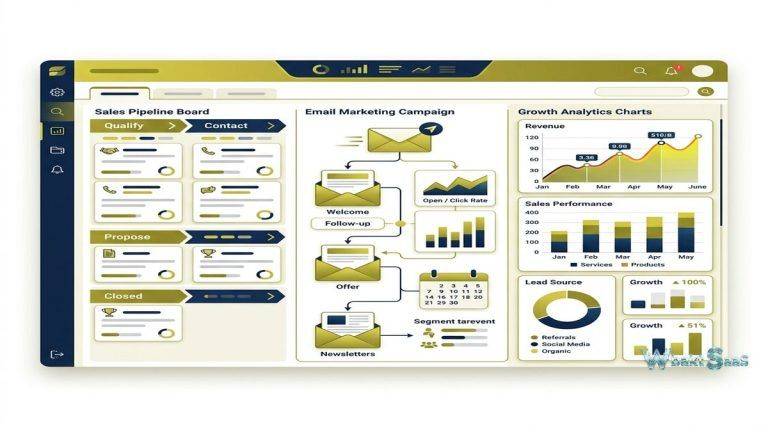
Zoho CRM’s sales automation manages the complete lead-to-deal lifecycle. Lead management captures leads from web forms, social media platforms, email campaigns, and third-party integrations, distributing them to sales representatives through configurable assignment rules based on territory, product interest, lead source, or round-robin distribution. Lead scoring evaluates lead quality based on demographic attributes and engagement behaviors, prioritizing high-potential leads for immediate and focused sales attention while routing lower-scoring leads to nurturing workflows.
Deal management tracks opportunities through customizable pipeline stages with weighted probability forecasting. Multiple pipelines support different sales processes for different products, markets, or business units. Deal-level activities — calls, emails, meetings, tasks — are logged against deal records, maintaining the complete and detailed interaction history that informs sales strategy decisions for each opportunity. Forecast views aggregate deal values across the pipeline, providing revenue projections that sales leadership uses for resource planning and performance tracking.
Contact and Account Management
Contact records store comprehensive information including communication history, deal associations, social media profiles, activity timeline, and custom fields. Account records represent organizations and aggregate contact-level data to provide company-level relationship views. Contact enrichment automatically populates records with publicly available information, reducing manual data entry and improving data quality. Relationship mapping visualizes the connections between contacts within an account, helping sales teams understand organizational decision-making structures and identify key stakeholders for complex B2B sales processes.

Blueprint Process Management
Blueprint is Zoho CRM’s visual process management tool that defines and enforces structured business processes within the CRM. Unlike simple workflow automation that triggers actions based on events, Blueprint creates guided process paths that ensure users follow prescribed steps in the correct order with required data entry at each stage. Transitions between stages can require specific conditions — mandatory fields, manager approval, document attachments — before the record can progress to the next stage.
This process enforcement is particularly valuable for regulated industries, complex selling processes, and organizations where consistent process execution directly impacts customer experience or compliance requirements. Blueprint reduces the process variation that occurs when different team members follow different approaches to the same business process, standardizing execution quality across the team.
Zia AI Assistant
Zia is Zoho CRM’s AI assistant that provides predictive analytics, intelligent recommendations, and conversational CRM interaction. Zia accurately predicts deal outcomes based on historical patterns, identifying deals likely to close and deals at risk of stalling. Lead and deal scoring uses machine learning to evaluate conversion probability based on attributes and engagement patterns that historically correlate with successful outcomes. Zia’s anomaly detection identifies unusual patterns in CRM data — unexpected spikes or drops in activity volume, deal values, or conversion rates — alerting managers to situations that may require investigation or intervention.
Conversational AI enables users to interact with CRM data through natural language — asking Zia questions about pipeline status, contact information, or performance metrics receives immediate responses without navigating through reports and dashboards. Zia’s recommendation engine suggests optimal times to contact leads based on historical response patterns, improving the effectiveness of outreach activities.
Omnichannel Communication
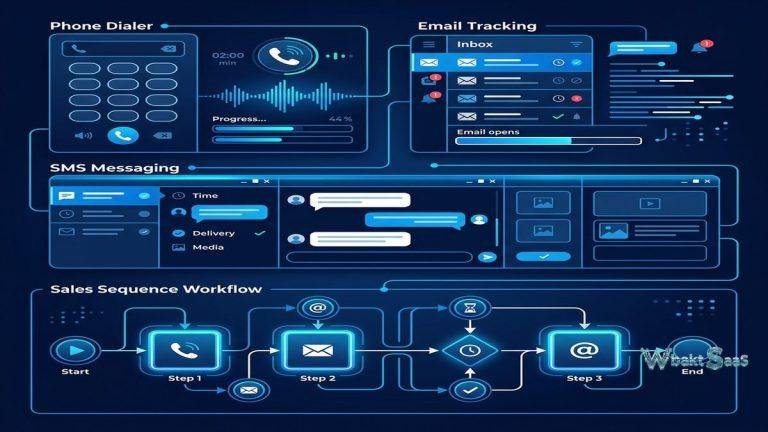
Zoho CRM consolidates communication across email, phone, live chat, social media, and web conferencing into a unified CRM context. Email integration with Gmail, Outlook, and Zoho Mail synchronizes correspondence to contact records. Built-in telephony enables making and receiving calls directly from CRM with call logging, recording, and analytics. Social media integration monitors brand mentions and enables engagement on Facebook, Twitter, Instagram, and LinkedIn from within the CRM interface.
Live chat (via Zoho SalesIQ integration) provides real-time website visitor engagement with visitor tracking, chatbot qualification, and chat-to-CRM record creation. Webinar integration connects virtual event participation data with CRM records, enriching contact profiles with event engagement information.
Canvas Design Studio
Canvas is Zoho CRM’s visual design tool that enables creating custom CRM page layouts using a drag-and-drop design interface. Unlike traditional CRM customization that rearranges standard fields within rigid templates, Canvas provides creative freedom to design record pages that match the organization’s brand aesthetics and workflow preferences. Teams can create industry-specific layouts — real estate property pages, healthcare patient views, education student records — that present information in the context most relevant to their specific use case.
Analytics and Reporting
Zoho CRM Analytics provides custom reports, dashboards, and analytics widgets. Standard reports cover pipeline analysis, activity metrics, lead conversion, and revenue forecasting. Custom report builder enables creating reports with filtered data, calculated fields, groupings, and multiple visualization types. Dashboards combine report widgets into role-specific views — executive overviews, manager performance summaries, and representative activity dashboards. Zoho Analytics integration extends reporting capabilities with advanced business intelligence features including data blending from multiple sources, predictive analytics, and collaborative analytics.
Marketing Automation
Zoho CRM includes built-in marketing automation for email campaigns, autoresponders, and lead nurturing sequences. Campaign management tracks marketing campaigns from creation through execution to ROI measurement, connecting marketing spend to pipeline generation and revenue outcomes. Integration with Zoho Campaigns (dedicated email marketing) and Zoho Marketing Automation provides expanded marketing capabilities for organizations needing more sophisticated marketing orchestration beyond the CRM’s built-in tools.
Zoho One Ecosystem
Zoho One bundles over 45 integrated business applications — CRM, email, office suite, project management, accounting, HR, help desk, website builder, social media, analytics, and more — into a single subscription. The ecosystem integration means that data flows seamlessly between applications: a customer support ticket in Zoho Desk connects to the contact record in Zoho CRM, project milestones in Zoho Projects link to the deal that generated them, and invoices in Zoho Books reference the products and contacts from CRM records. This integration eliminates the data silos and integration overhead that organizations experience when using separate applications from different vendors for each business function.
Customization and Development
Custom modules extend the data model beyond standard CRM entities. Custom functions (written in Deluge, Zoho’s proprietary scripting language) automate complex business logic. Client and server-side scripting enable advanced interface customization. Sandbox environments enable testing customizations before deploying to production. Zoho CRM’s REST API provides programmatic access for custom integrations with external systems and applications.
Workflow Rules and Automation
Workflow rules automate routine business actions triggered by record events — creating follow-up tasks when deals reach specific stages, sending email notifications when leads are assigned, updating fields when conditions are met, and scheduling time-based actions that execute at specified intervals after trigger events. Macros enable combining multiple actions into single-click operations, reducing repetitive multi-step processes to instant execution. Workflow analytics track automation performance, showing how many times each rule fires and confirming that automated processes execute as intended.
Territory Management
Territory management organizes sales teams by geographic regions, product lines, industry verticals, or account size tiers. Territory rules automatically assign records to the appropriate territory based on configurable criteria, ensuring that leads and accounts reach the correct sales team without any manual routing. Territory-based forecasting provides revenue projections at the territory level, enabling regional sales managers to track their area’s performance independently while contributing to organizational forecasts.
Inventory Management
Zoho CRM includes built-in inventory management for products, price books, quotes, sales orders, purchase orders, invoices, and vendors. Product catalogs define the products and services available for quoting, with multiple price books supporting different pricing for different customer segments, regions, or channels. Quote-to-order workflows automate the progression from initial quote through customer approval to sales order and invoicing, streamlining the revenue cycle within the CRM platform.
Security and Compliance
Role-based access control, profile-based permissions, field-level security, and record-level sharing rules protect sensitive CRM data. Data encryption, audit logs, and IP restrictions provide robust enterprise-grade security measures. GDPR compliance features include consent management, data processing records, and right-to-erasure capabilities for organizations operating within European data protection requirements. HIPAA compliance support serves healthcare organizations with additional data protection requirements.
Integrations
Native integrations connect Zoho CRM with Google Workspace, Microsoft 365, Slack, Mailchimp, QuickBooks, and other popular business tools. The Zoho Marketplace provides additional integrations built by Zoho and third-party developers. Zoho Flow (Zoho’s integration platform) creates automated workflows connecting Zoho CRM with hundreds of external applications through trigger-action automation, similar to Zapier but natively integrated within the Zoho ecosystem.
Mobile Application
Zoho CRM’s mobile app provides field access on iOS and Android with offline support, card scanner, voice notes, check-in for meeting locations, and route planning for field sales visits. Zia voice assistant enables hands-free CRM interaction while traveling. Mobile analytics provide on-the-go access to dashboards and reports, and mobile notifications alert representatives to important CRM events requiring attention.
Common Use Cases
Cost-Conscious Growing Businesses: Organizations seeking enterprise-grade CRM capabilities without enterprise pricing use Zoho CRM to access professional sales automation, marketing integration, and analytics at a fraction of Salesforce or HubSpot costs.
All-in-One Platform: Businesses wanting a unified technology stack use Zoho One to replace multiple SaaS subscriptions with a single integrated ecosystem, simplifying vendor management and eliminating integration challenges.
Process-Driven Organizations: Companies with structured sales or service processes use Blueprint to enforce consistent process execution, ensuring compliance and quality standards across every customer interaction.
International Organizations: Global businesses use Zoho CRM’s multi-currency support, multi-language interface, and territory management to manage sales operations across multiple countries and regions from a unified platform.
Real Estate and Property: Real estate companies customize Zoho CRM with Canvas layouts and custom modules to create property-focused CRM experiences that track listings, viewings, offers, and closings within a familiar sales pipeline structure.
Education Institutions: Educational organizations use Zoho CRM to manage student recruitment pipelines, track enrollment processes, and maintain alumni relationships through custom modules designed for education-specific workflows.
Manufacturing and Distribution: Manufacturing companies use Zoho CRM’s inventory management and quote-to-order workflows to manage customer relationships alongside product catalogs, pricing, and order fulfillment processes within a single platform.
Data Migration
Zoho CRM provides data migration tools for importing records from spreadsheets, other CRM platforms, and database exports. Migration wizards map source data fields to Zoho CRM fields, handle data transformation, and manage duplicate detection during import. Migration from Salesforce, HubSpot, and other major CRM platforms is supported through dedicated migration tools that preserve record relationships and historical data during the transition process.
Pricing
Zoho CRM offers five editions — Free (up to 3 users), Standard, Professional, Enterprise, and Ultimate — with per-user, per-month pricing that remains significantly below comparable Salesforce and HubSpot tiers at every level. The free edition provides genuine CRM functionality for very small teams, and even the Ultimate edition costs substantially less than mid-tier offerings from Salesforce. Zoho One bundles the entire 45+ application ecosystem at an additional per-user cost that typically represents substantial savings compared to purchasing equivalent individual applications from multiple vendors. Annual billing provides additional savings over monthly payment options.
Pricing and features are subject to change. Please verify current plan details on the official Zoho website before making purchasing decisions.
Limitations
- User interface: Some users find Zoho CRM’s interface less polished and less modern than competitors like HubSpot. Canvas partially addresses this through visual customization but requires design effort from the implementing team.
- Third-party ecosystem: While Zoho’s own ecosystem is comprehensive, third-party integration options and marketplace applications are fewer than Salesforce’s AppExchange or HubSpot’s App Marketplace.
- Learning curve: The breadth of features and customization options creates a significant learning curve, particularly for teams migrating from simpler CRM tools.
- Enterprise adoption: Despite strong capabilities, Zoho CRM has lower brand recognition in enterprise markets, which can create stakeholder buy-in challenges in larger organizations accustomed to established enterprise vendors.
- Support response: Standard support response times may not match the premium support levels available from higher-priced competitors, though paid support plans improve response times.
Summary
Zoho CRM provides a comprehensive CRM platform that delivers enterprise-grade functionality at small-to-medium business pricing, making professional customer relationship management accessible to organizations at virtually every budget level. The combination of sales automation, marketing tools, Zia AI, Blueprint process management, Canvas visual design, inventory management, and the broader Zoho One ecosystem creates a uniquely complete business technology platform that few competitors can match at comparable price points.
The platform’s value proposition is strongest for organizations that want extensive CRM capabilities without enterprise pricing and for businesses seeking unified technology stacks through the Zoho One ecosystem. Private ownership enables Zoho to prioritize product development and customer value over aggressive monetization strategies, resulting in feature depth that consistently exceeds expectations at each price tier and makes Zoho a compelling choice for budget-conscious organizations that refuse to compromise on capability.
Zoho CRM’s Blueprint process management and Canvas visual design distinguish the platform from competitors by providing process enforcement and visual customization capabilities that are typically available only in significantly more expensive enterprise platforms. These features enable organizations to enforce standardized sales processes and create visually tailored CRM experiences without the custom development costs that such capabilities require on other platforms.
CRM platforms including Zoho, Salesforce, HubSpot, Pipedrive, and Microsoft Dynamics 365 each serve different market positioning and pricing strategies. Zoho’s advantages center on price-to-feature ratio, ecosystem breadth, process management depth, and the comprehensive Zoho One platform that extends CRM into a complete business operating system. Organizations evaluating CRM platforms should consider whether cost efficiency, ecosystem integration, or brand prestige matters most for their specific organizational context and decision-making criteria.
Features, pricing, and availability discussed in this review reflect information available at the time of writing. Software products evolve continuously, and details may have changed since publication. Please verify current information directly on the official Zoho website. WBAKT SaaS is an independent review platform with no affiliate relationships with any software company mentioned in this article.
For related CRM tools, see our reviews of Salesforce CRM, HubSpot CRM, and Pipedrive CRM.
About the Author