Quantitative analytics platforms like Google Analytics tell organizations what happens on their websites — how many visitors, which pages they view, where they come from, and when they convert. What quantitative analytics cannot reveal is why visitors behave the way they do — why they scroll past important content, why they abandon forms halfway through completion, why they click on elements that are not clickable, or why they leave pages that should be converting. Hotjar fills this qualitative gap by visualizing actual user behavior through heatmaps, session recordings, feedback tools, and surveys that show how real visitors interact with website pages.
Founded in 2014 and acquired by Contentsquare in 2021, Hotjar has become one of the most widely adopted user behavior analytics tools, serving organizations from individual website owners to enterprise teams with millions of monthly visitors. Its value proposition centers on making qualitative user research accessible without requiring the technical complexity, expensive consultants, or lengthy research timelines that traditional usability testing demands. Understanding Hotjar’s capabilities helps organizations determine how behavioral analytics can complement their quantitative data and improve user experience decisions.
Heatmaps
Heatmaps visualize aggregate user interaction patterns on website pages using color-coded overlays. Hot areas (red, orange) indicate high interaction frequency, while cool areas (blue, green) indicate low interaction. Hotjar provides three types of heatmaps that each reveal different aspects of user behavior:
Click Heatmaps: Show where users click (or tap on mobile) on a page. Click heatmaps reveal which elements attract user attention, whether calls-to-action receive adequate clicks, whether users attempt to click on non-interactive elements (indicating design confusion), and how click patterns differ between desktop and mobile visitors. High click concentration on unexpected areas may indicate user confusion about page navigation or visual hierarchy.
Move Heatmaps: Track mouse cursor movement patterns on desktop devices. Research correlates mouse movement with visual attention — users tend to move their cursor toward content they are reading or considering. Move heatmaps reveal content engagement patterns, showing which page sections receive sustained attention and which are passed over without engagement.
Scroll Heatmaps: Visualize how far down the page visitors scroll, revealing the percentage of visitors who see each section of the page. A sharp scroll drop-off after the first visible section suggests that above-the-fold content fails to motivate continued scrolling. Critical content or calls-to-action placed below the average fold line may not be seen by a significant portion of visitors, informing decisions about content placement and page layout prioritization.
Heatmaps can be generated for any page URL and automatically aggregate data across all visitors who view that page. Device-specific heatmaps compare behavior patterns between desktop, tablet, and mobile visitors, revealing how page design performs across different screen sizes and interaction modalities. Date range filtering shows how interaction patterns change over time or in response to design modifications.
Session Recordings
Session recordings capture individual visitor sessions as video-like playback of user interactions — mouse movements, clicks, scrolling, form interactions, and page navigation. Watching actual users interact with a website reveals usability issues, confusion points, and friction that aggregate metrics and heatmaps cannot capture. A recording might show a user repeatedly clicking on a non-interactive element, scrolling up and down searching for information, hesitating on a form field, or rage-clicking on a button that does not respond.
Filtering capabilities enable finding recordings that match specific criteria: sessions from specific pages, sessions containing specific user actions (form interactions, click events), sessions of specific duration (very short sessions may indicate immediate abandonment), sessions from specific traffic sources, and sessions from specific device types. These filters help researchers efficiently locate recordings that demonstrate specific behaviors rather than watching recordings randomly.
Session recordings provide context that quantitative data lacks. A high bounce rate on a landing page tells you that visitors leave quickly, but a session recording shows you exactly what those visitors see, where they look, what they interact with, and at what point they decide to leave. This behavioral context transforms abstract metrics into actionable user experience insights that inform specific design improvements.

Feedback Tools
Hotjar Feedback provides an always-visible widget that visitors can use to submit feedback about their experience on any page. The feedback widget asks a simple question — typically “How would you rate your experience?” — with emoji-based sentiment options and an optional text comment field. This passive feedback collection captures user sentiment continuously without interrupting the browsing experience, building a database of user opinions that reveals satisfaction patterns across different pages and user journeys.
Feedback responses are tagged with the page URL, device type, browser, and geographic location of the respondent, enabling analysis of feedback patterns by page, device, or audience segment. Negative feedback spikes on specific pages identify user experience problems that may not be visible in analytics data. Positive feedback confirms that recent design changes improve user satisfaction.
Surveys
Hotjar Surveys collect structured feedback through targeted questionnaires that appear based on user behavior triggers. Surveys can be triggered on page load, after a specific time on page, on exit intent (when the cursor moves toward the browser’s close button), after scrolling to a specific page depth, or after interacting with specific page elements. This behavioral targeting ensures that surveys appear at contextually relevant moments rather than arbitrarily interrupting the browsing experience.
Survey question types include multiple choice, rating scales (NPS, satisfaction, effort), open-ended text, and dropdown selections. Multi-page surveys enable longer research questionnaires while single-question surveys minimize disruption for quick pulse measurements. Survey response analysis includes sentiment trends, text response categorization, and performance comparison across time periods and user segments.
Net Promoter Score (NPS) surveys measure user loyalty by asking how likely users are to recommend the product or website. NPS tracking over time reveals whether user sentiment improves in response to product improvements or deteriorates due to unresolved issues. Post-purchase surveys, feature request surveys, and churn risk surveys each serve specific research objectives within the broader user feedback ecosystem.
Conversion Funnels
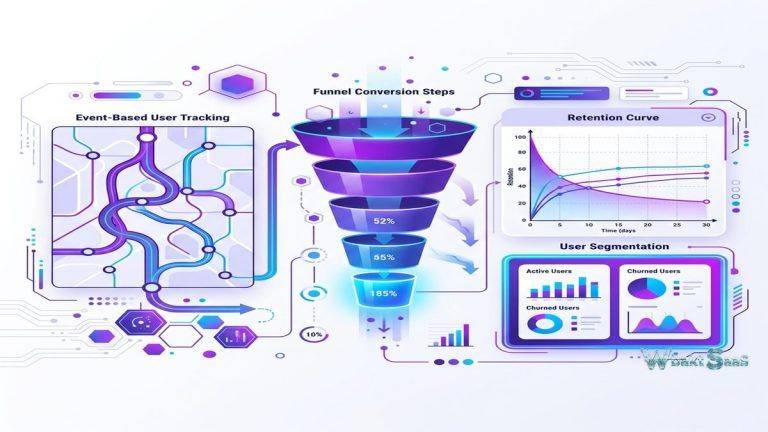
Hotjar Funnels visualize user progression through multi-step conversion processes — signup flows, checkout processes, onboarding sequences, or any defined sequence of pages. Funnel visualization shows the conversion rate between each step, highlighting where the largest drop-offs occur. If 1,000 visitors reach step one but only 200 reach step three, the funnel reveals whether the primary drop-off occurs between steps one and two or between steps two and three, directing optimization efforts toward the highest-impact improvement opportunity.
Funnel-linked session recordings filter recordings to show only sessions where users entered the funnel, enabling direct observation of the specific behaviors that cause users to drop out at each step. This connection between quantitative funnel data and qualitative session recordings creates a powerful diagnostic tool: funnels identify where problems exist, and recordings reveal why those problems occur.
User Interviews
Hotjar’s Engage feature facilitates user interview recruitment by presenting interview invitations to website visitors who match specified criteria. Organizations define participant requirements — demographics, behavioral criteria, device type — and Hotjar presents interview scheduling invitations to matching visitors. Automated scheduling integrates with calendar tools to book interview sessions without manual coordination. This recruitment approach reaches actual users of the product or website rather than recruited participants who may not represent the real user base.
Privacy and Compliance
Hotjar implements privacy controls that address GDPR, CCPA, and other data protection requirements. Automatic data suppression prevents recording of sensitive form fields — passwords, credit card numbers, personal identification — by default. Manual suppression tags allow marking additional page elements as private, preventing their capture in recordings and heatmaps. Visitor consent integration works with consent management platforms to ensure that behavior tracking only activates for visitors who have provided appropriate consent.
Data retention policies automatically delete collected data after configurable retention periods. IP anonymization prevents geographic identification of individual visitors. The combination of automatic and configurable privacy controls enables organizations to use behavioral analytics while maintaining compliance with privacy regulations that govern their industries and geographies.
Integrations
Hotjar integrates with major analytics and marketing platforms including Google Analytics, Google Tag Manager, HubSpot, Slack, Microsoft Teams, Zapier, and Segment. The Google Analytics integration links Hotjar recordings to GA4 sessions, enabling navigation from analytics data to specific behavioral recordings that explain the quantitative patterns observed in analytics reports.
Slack and Microsoft Teams integrations deliver real-time feedback notifications and survey responses to team communication channels, ensuring that user feedback reaches relevant team members promptly without requiring regular Hotjar dashboard monitoring. Zapier integration enables automated workflows that trigger actions in other tools based on Hotjar events — for example, creating customer support tickets when negative feedback is submitted or adding survey respondents to email marketing segments.
The Hotjar API provides programmatic access to collected data for organizations that want to incorporate behavioral insights into custom dashboards, automated reports, or data warehouses. API access enables aggregating Hotjar data with other data sources for comprehensive user experience analysis that spans multiple research and analytics tools.
Trends Dashboard
Hotjar Trends provides a metrics dashboard that tracks behavioral indicators over time — page views, sessions, scroll depth, click rates, rage click frequency, and u-turn navigation patterns. Trend visualization shows how these behavioral metrics change across days, weeks, and months, revealing the impact of design changes, seasonal patterns, and traffic source variations on user behavior. Anomaly detection highlights unusual behavioral patterns that warrant investigation — sudden increases in rage clicks on a specific page might indicate a broken feature or confusing interface change.
Behavioral segmentation within Trends filters data by device type, traffic source, geographic location, and custom attributes. Comparing behavioral patterns across segments reveals whether user experience issues affect all visitors equally or are concentrated among specific user groups. Mobile visitors might exhibit different scroll and click patterns than desktop visitors, and traffic from paid advertising might behave differently than organic search traffic — insights that inform device-specific and channel-specific optimization strategies.
Common Use Cases
Landing Page Optimization: Marketing teams use heatmaps and recordings to understand how visitors interact with landing pages — whether they see key messages, whether calls-to-action receive attention, and where engagement drops off. This behavioral data informs iterative design improvements that increase landing page conversion rates.
E-commerce Checkout Optimization: E-commerce teams use funnel analysis and session recordings to diagnose checkout abandonment. Recordings of users who abandon checkout reveal specific friction points — confusing form fields, unexpected shipping costs, payment option limitations — that quantitative analytics cannot explain.
Form Optimization: Organizations with multi-field forms use recordings and heatmaps to identify problematic form fields — fields where users hesitate, backtrack, or abandon the form. This field-level behavioral analysis informs form simplification and redesign decisions that reduce form abandonment rates.
Content Strategy: Content teams use scroll heatmaps to understand how much of their content visitors actually consume. Articles where most visitors scroll to completion indicate engaging content, while articles with early scroll drop-off may need structural improvements, better headlines, or more engaging opening sections.
Product Development: SaaS product teams use recordings and feedback to understand how users interact with new features, identify usability issues before they become support tickets, and gather qualitative input that complements quantitative product analytics from tools like Mixpanel or Amplitude.
UX Research: User experience researchers use Hotjar as a continuous research tool that supplements periodic usability testing sessions. Ongoing behavioral data collection reveals issues as they emerge rather than waiting for scheduled research activities to uncover them.
Pricing
Hotjar offers a free Basic plan with limited daily session capacity. Plus, Business, and Scale plans progressively increase daily session limits, storage capacity, feature access, and support levels. Pricing scales with daily session volume, making costs proportional to website traffic and usage intensity.
Pricing and features are subject to change. Please verify current plan details on the official Hotjar website before making purchasing decisions.
Limitations
- Sampling limitations: On high-traffic sites, Hotjar samples sessions rather than capturing every visit, meaning some user behaviors may not be represented in the data.
- Performance impact: The tracking script adds page load overhead, though Hotjar uses asynchronous loading to minimize visible impact on page rendering speed.
- Single-page application complexity: SPAs built with frameworks like React or Angular may require additional configuration for accurate page-level heatmap generation and recording segmentation.
- Analysis time investment: Session recordings require manual review time. Organizations with thousands of daily recordings must develop efficient filtering and sampling strategies to extract insights without overwhelming reviewer capacity.
- Not a replacement for quantitative analytics: Hotjar complements rather than replaces quantitative analytics platforms. Organizations need both types of data for comprehensive website understanding.
Summary
Hotjar bridges the gap between quantitative analytics (what happens) and qualitative understanding (why it happens). Its combination of heatmaps, session recordings, feedback tools, and surveys provides a behavioral analytics toolkit that makes user research accessible to organizations of all sizes. The visual nature of heatmaps and recordings communicates user experience insights in ways that spreadsheets and dashboards cannot — showing stakeholders exactly how users interact with their websites rather than abstracting behavior into numerical metrics.
Implementation requires embedding a single JavaScript tracking snippet in the website header — a process that takes minutes through direct code insertion or Google Tag Manager deployment. Once installed, Hotjar begins collecting behavioral data immediately, generating heatmaps and recordings for pages that receive visitor traffic. The low implementation barrier makes Hotjar one of the fastest-to-value analytics tools available, providing actionable behavioral insights within hours of installation rather than the weeks or months that more complex analytics implementations require.
The Contentsquare acquisition has positioned Hotjar within a broader digital experience analytics ecosystem. While Hotjar maintains its standalone product identity and accessible pricing, the Contentsquare connection provides enterprise organizations with a migration path to more sophisticated behavioral analytics capabilities as their needs grow beyond Hotjar’s core feature set. This positioning serves organizations at different maturity levels — starting with Hotjar’s accessible tools and potentially graduating to Contentsquare’s enterprise platform as analytical needs increase.
Effective use of Hotjar requires establishing regular analysis workflows rather than installing the tool and expecting insights to appear automatically. Organizations that dedicate time to reviewing recordings, analyzing heatmap patterns, reading feedback submissions, and acting on survey results extract significantly more value than those that collect data without systematic review processes.
User behavior analytics tools including Hotjar, Crazy Egg, FullStory, Lucky Orange, and Mouseflow each approach behavioral analytics with different feature sets and pricing models. Hotjar’s advantages center on its intuitive interface, integrated feedback and survey tools, and accessible pricing for smaller organizations. Organizations evaluating behavioral analytics tools should consider their traffic volume, analysis workflow requirements, privacy compliance needs, and budget when selecting the platform that best supports their user experience optimization efforts.
Features, pricing, and availability discussed in this review reflect information available at the time of writing. Software products evolve continuously, and details may have changed since publication. Please verify current information directly on the official Hotjar website. WBAKT SaaS is an independent review platform with no affiliate relationships with any software company mentioned in this article.
For related analytics and marketing tools, see our reviews of Google Analytics 4, Mixpanel product analytics, and VWO testing solution.
About the Author