Marketing campaigns drive traffic to websites, but converting that traffic into leads, customers, and revenue depends on the experience visitors encounter when they arrive. Generic website pages — designed to serve multiple audiences and multiple purposes simultaneously — often convert poorly for specific campaign traffic because they present too many options, too many navigation paths, and too little focus on the single conversion action the campaign intends to drive. Unbounce addresses this fundamental conversion challenge by enabling marketers to rapidly create purpose-built, campaign-specific landing pages designed exclusively for conversion optimization and lead generation, without requiring developer involvement for each new page or campaign variation.
Founded in 2009 in Vancouver, Canada, Unbounce pioneered and effectively created the entire dedicated landing page builder category for digital marketers, establishing the widely-accepted principle that campaign-specific landing pages consistently outperform general website pages for conversion rate optimization. The platform serves digital marketing teams, performance marketing agencies, growth-focused startups, and small businesses that need to create, rigorously test, and continuously optimize conversion-focused landing pages rapidly and independently — launching targeted campaigns with fully customized dedicated landing experiences in hours rather than waiting multiple weeks for developer-built custom pages. Thoroughly understanding Unbounce’s capabilities helps marketing teams evaluate whether dedicated landing page tooling can improve their campaign conversion rates compared to directing traffic to existing website pages.
Landing Page Builder
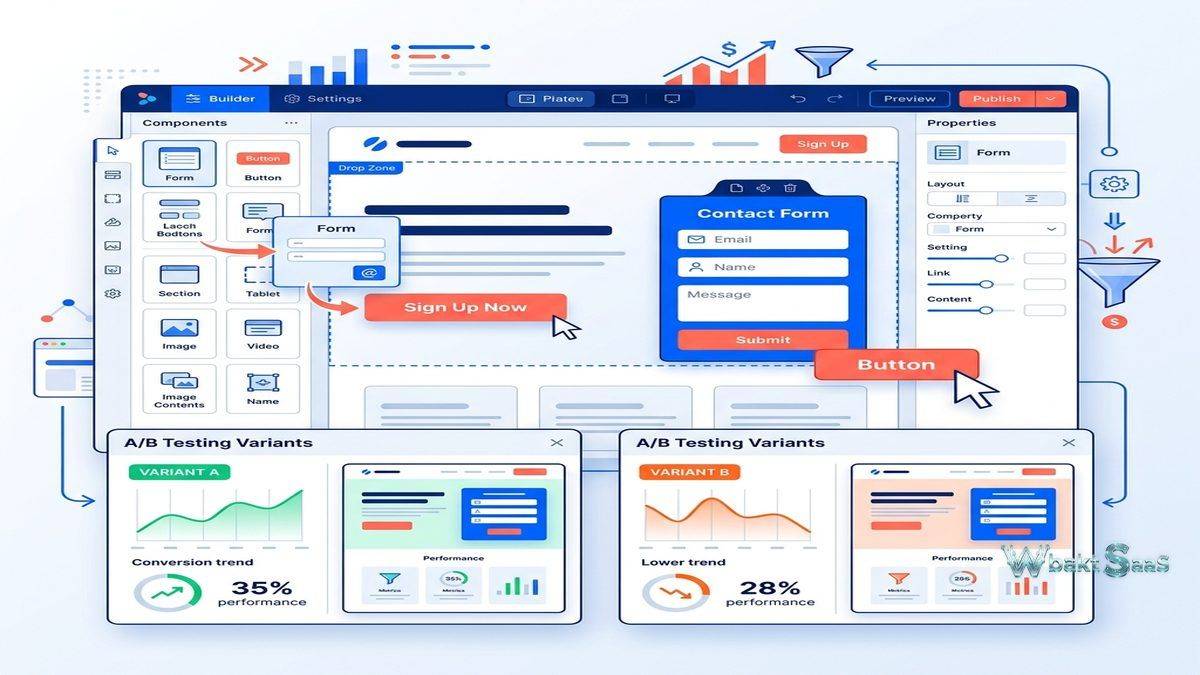
Unbounce’s drag-and-drop builder enables marketers to create landing pages without writing code. The visual editor provides complete control over layout, typography, imagery, forms, buttons, and interactive elements through a WYSIWYG interface that renders pages exactly as visitors will see them. Pre-built templates organized by industry and campaign type provide professional starting points that marketers customize with their own branding, messaging, and imagery.
The builder supports adding custom HTML, CSS, and JavaScript for marketers who need functionality beyond the drag-and-drop interface — embedding third-party widgets, implementing custom tracking, or adding interactive elements that the standard builder components do not include. This hybrid approach serves both code-free marketers who need rapid page creation and technically capable marketers who need advanced customization flexibility.
Mobile-responsive design ensures that landing pages display correctly across desktop, tablet, and mobile devices. The builder provides separate mobile editing capabilities that allow adjusting layout, element visibility, and text sizing specifically for mobile viewports rather than relying entirely on automatic responsive adaptation. This device-specific control is important because mobile landing page optimization often requires different layout decisions than desktop optimization — larger buttons, simplified forms, and reduced content density that accommodate the mobile browsing context.
Smart Traffic
Smart Traffic is Unbounce’s AI-powered conversion optimization feature that automatically routes visitors to the landing page variant most likely to convert them based on their individual attributes. Rather than traditional A/B testing that shows the same winning variant to all visitors, Smart Traffic uses machine learning to identify which page variant performs best for different visitor segments — based on geographic location, device type, browser, time of day, and other visitor characteristics.
Smart Traffic begins optimizing after accumulating sufficient visitor data, progressively improving its routing decisions as it learns which visitor attributes predict conversion on each variant. The AI approach addresses a limitation of traditional A/B testing: the assumption that a single “winning” variant performs best for all visitors. In practice, different visitor segments often respond differently to different page designs, messaging approaches, and visual styles. Smart Traffic capitalizes on these segment-level preferences that traditional testing cannot efficiently identify or act upon.

A/B Testing
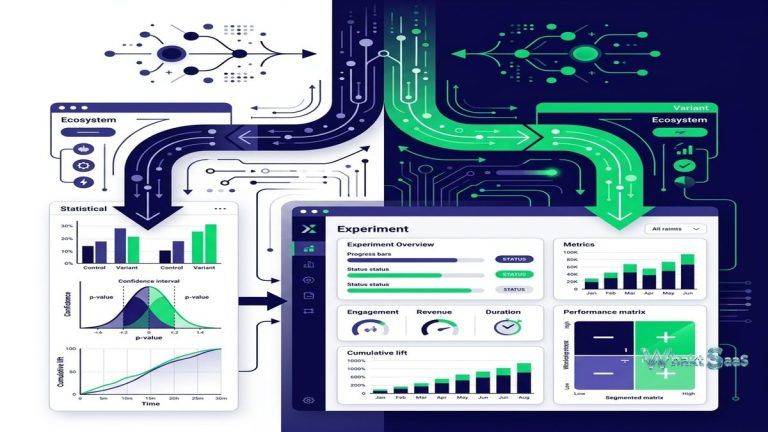
Traditional A/B testing remains available alongside Smart Traffic for marketers who prefer controlled experimentation. The A/B testing interface creates page variants that differ in specific elements — headlines, images, form layouts, button colors, copy, social proof placement — and splits traffic equally between variants to determine which combination produces the highest conversion rate. Statistical significance indicators show when test results are reliable enough to declare a winner with confidence.
Multi-variant testing enables testing multiple elements simultaneously, accelerating the optimization process for pages where several elements might impact conversion performance. Test results provide conversion rate, statistical confidence, and improvement percentage for each variant, giving clear guidance on which design and messaging choices serve conversion objectives most effectively.
Popups and Sticky Bars
Unbounce Popups display overlay messages on existing website pages based on configurable trigger conditions — time on page, scroll depth, exit intent (detecting when the visitor’s cursor moves toward the browser close button), or on-click triggers attached to specific page elements. Popup design uses the same visual builder as landing pages, maintaining design consistency and enabling rapid popup creation.
Sticky Bars display persistent notification bars at the top or bottom of website pages, promoting offers, announcements, or calls-to-action without disrupting the browsing experience as aggressively as full-page popups. Scheduling controls activate and deactivate popups and sticky bars based on date ranges, enabling campaign-specific promotional messages that automatically start and stop with their associated campaigns.
Targeting rules control which visitors see popups and sticky bars based on referral source, URL parameters, geographic location, and cookie-based frequency capping that prevents showing the same message to visitors who have already seen or dismissed it. These targeting controls ensure that conversion prompts reach the right visitors at the right moments without creating annoying experiences for visitors who are not in the target audience.
Dynamic Text Replacement
Dynamic Text Replacement (DTR) automatically customizes landing page text based on the search query or ad keyword that brought the visitor to the page. When a visitor searches for “enterprise CRM software” and clicks an ad, DTR changes the landing page headline from a generic message to one that includes “enterprise CRM software” — creating message match between the ad and the landing page that reinforces relevance and improves conversion rates.
DTR works by mapping URL parameters to specific text elements on the page, enabling a single landing page to serve multiple keyword variations without creating separate pages for each keyword. This capability dramatically reduces the number of landing pages needed for keyword-targeted campaigns while maintaining the message-match principle that landing page optimization best practices recommend.
Smart Copy
Unbounce Smart Copy uses AI to generate marketing copy for landing pages, email subject lines, Google Ads, Facebook Ads, and other marketing content. Copy generation takes prompts describing the product, audience, and desired tone, producing multiple copy variations that marketers can refine and adapt. While AI-generated copy should be reviewed and refined by human marketers to ensure brand voice consistency and accuracy, Smart Copy accelerates the copywriting process for teams producing high volumes of marketing content across campaigns.
Integrations
Unbounce integrates with major marketing technology platforms: CRM systems (Salesforce, HubSpot), email marketing (Mailchimp, AWeber, Campaign Monitor), marketing automation (Marketo, ActiveCampaign, Pardot), analytics (Google Analytics, Google Tag Manager), and payment processing (Stripe). Zapier integration extends connectivity to hundreds of additional applications, enabling automated workflows that trigger actions in other tools when landing page conversions occur.
Webhook integration provides custom data routing for organizations with specific integration requirements, enabling landing page conversion data to flow into proprietary systems and databases that pre-built integrations do not directly support.
Analytics and Reporting
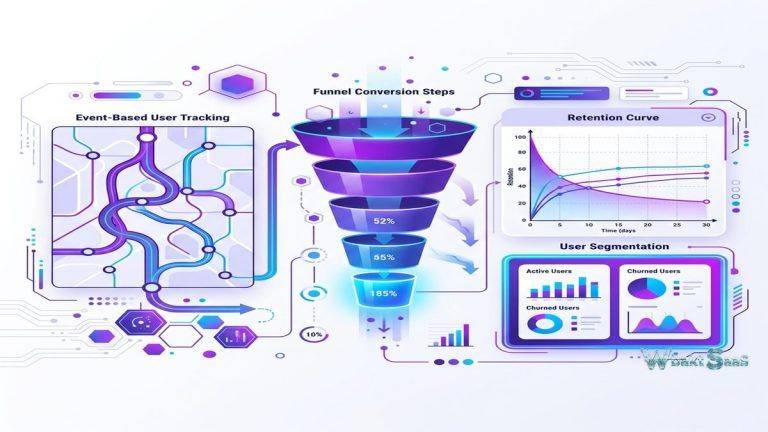
Unbounce’s built-in analytics track visitor counts, conversion counts, conversion rates, and performance trends over time for each landing page, popup, and sticky bar. Variant-level analytics compare performance across A/B test variations and Smart Traffic variants, showing which page versions generate the strongest conversion performance. Traffic source tracking shows how visitors from different sources — paid search, organic search, social media, email, direct — convert at different rates, revealing which traffic sources deliver the most qualified visitors.
Real-time analytics show current page performance as campaigns launch, enabling rapid identification of issues like broken forms, loading problems, or unexpected traffic patterns that require immediate attention. Historical performance trends help identify seasonal patterns, campaign effectiveness changes, and long-term optimization progress across the landing page portfolio.
Custom Domains
Unbounce landing pages can be published to custom domains and subdomains, maintaining brand consistency by serving pages from the organization’s own domain rather than a generic Unbounce subdomain. SSL certificates are automatically provisioned for custom domains, ensuring secure HTTPS connections that both visitors and search engines expect. Multiple custom domains support organizations managing campaigns across different brands, products, or geographic markets from a single Unbounce account.
AMP Landing Pages
Unbounce supports creating Accelerated Mobile Pages (AMP) landing pages that load nearly instantly on mobile devices. AMP pages strip unnecessary code and follow Google’s AMP framework constraints to achieve sub-second loading times that dramatically improve mobile conversion rates. Studies consistently show that faster page load times correlate with higher conversion rates, and AMP pages deliver the fastest possible mobile landing page experience. For PPC campaigns where mobile traffic constitutes a significant portion of clicks, AMP landing pages can meaningfully improve campaign ROI through higher conversion rates.
Page Speed Optimization
Unbounce automatically optimizes page load speed through image compression, lazy loading, and efficient asset delivery via content delivery networks (CDN). Page speed optimization is critical for landing page performance because slow-loading pages suffer high bounce rates — visitors who clicked an ad expecting instant content encounter loading delays and leave before seeing the page content. Unbounce’s hosting infrastructure and CDN delivery ensure that landing pages load quickly regardless of visitor geographic location.
Script Manager
Script Manager enables adding third-party scripts — tracking pixels, analytics code, chatbots, heatmap tools, retargeting pixels — to landing pages without modifying individual page code. Scripts can be applied globally across all pages, to specific domains, or to individual pages, providing centralized script management that simplifies tracking implementation and ensures consistent measurement across the landing page portfolio. When scripts need updating — changing analytics properties, updating pixel codes, or adding new tracking tools — Script Manager enables updating all pages simultaneously rather than editing each page individually.
Client Management
Agency-focused features enable managing multiple client accounts from a single Unbounce login. Client sub-accounts maintain separate branding, domains, and analytics while providing the agency centralized access for page creation, optimization, and reporting. Permission controls determine what client team members can access and modify within their account, supporting collaborative workflows where both agency and client teams participate in landing page management.
Security and Compliance
Unbounce provides GDPR compliance features including cookie consent management, data processing controls, and the ability to delete visitor data upon request. Two-factor authentication secures account access. Automatic SSL encryption protects data transmission between visitors and landing pages. These security and compliance features address the regulatory requirements that organizations must satisfy when collecting personal information through landing page forms.
Common Use Cases
PPC Campaigns: Marketers create keyword-specific landing pages for Google Ads and Microsoft Ads campaigns, using DTR to maintain message match and A/B testing to optimize conversion rates for each keyword group.
Lead Generation: B2B marketing teams create gated content landing pages — white paper downloads, webinar registrations, demo requests — with optimized forms and compelling copy designed to maximize lead capture conversion rates.
Product Launches: Marketing teams rapidly create dedicated landing pages for new product launches, feature announcements, and promotional campaigns without waiting for development team availability.
Agency Services: Marketing agencies create and manage landing pages for multiple clients, using Unbounce’s multi-client management capabilities to maintain organized campaign management across client accounts.
E-commerce Promotions: E-commerce businesses create dedicated landing pages for seasonal promotions, flash sales, and product-specific campaigns that focus visitors on specific purchase actions rather than general browsing.
SaaS Free Trial Acquisition: SaaS companies create landing pages specifically designed to convert trial sign-ups, featuring benefit-focused messaging, social proof from existing customers, and simplified signup forms that reduce friction in the trial registration process. Smart Traffic helps identify which messaging approach resonates most effectively with different visitor segments.
Webinar Registration: Marketing teams create dedicated webinar registration pages with compelling speaker information, agenda details, and urgency elements that drive registration completion. Post-webinar landing pages capture on-demand viewing registrations, extending the content’s lead generation value beyond the live event date.
Pricing
Unbounce pricing follows tiered plans that scale by feature access and conversion volume. Plans include landing pages, popups, sticky bars, and Smart Traffic with varying limits on conversions, domains, and users. Annual billing provides savings compared to monthly payment. Smart Traffic and Smart Copy features are included in higher-tier plans, adding AI-powered optimization capabilities to the core landing page building functionality.
Pricing and features are subject to change. Please verify current plan details on the official Unbounce website before making purchasing decisions.
Limitations
- Learning curve: While the builder is visual, creating high-converting landing pages requires understanding conversion optimization principles beyond tool proficiency.
- Template limitations: Some users find the template selection more limited compared to competitors like Instapage or Leadpages.
- Pricing at scale: Conversion-based pricing can become expensive for high-traffic campaigns that generate large conversion volumes.
- Form complexity: The built-in form builder handles standard form fields well but may require custom code for complex multi-step or conditional form logic.
- SEO limitations: Landing pages are designed for paid traffic conversion rather than organic search ranking. SEO capabilities are limited compared to full website CMS platforms.
Summary
Unbounce provides a purpose-built platform for creating, testing, and optimizing landing pages that convert campaign traffic into measurable business results. The combination of visual page building, Smart Traffic AI optimization, A/B testing, popups, sticky bars, and dynamic text replacement addresses the complete conversion optimization workflow from page creation through ongoing performance improvement.
Smart Traffic represents a significant evolution beyond traditional A/B testing, recognizing that different visitor segments respond differently to different page experiences. By automatically routing visitors to the variant most likely to convert them individually, Smart Traffic captures conversion improvements that static A/B testing — which assumes one variant is best for all visitors — cannot achieve.
The platform’s ROI justification centers on conversion rate improvement. Even modest conversion rate increases — from 3% to 4%, for example — translate to significant revenue impact when applied across campaign traffic volumes that represent substantial advertising investment. For organizations spending meaningfully on paid traffic, the conversion rate improvements that optimized landing pages and AI-powered traffic routing deliver typically far exceed the platform subscription cost.
Landing page platforms including Unbounce, Instapage, Leadpages, and ClickFunnels each approach conversion optimization with distinctly different feature priorities and strategic emphases and design philosophies. Unbounce’s advantages center on Smart Traffic AI, robust A/B testing, Dynamic Text Replacement, and the popup/sticky bar capabilities that extend conversion optimization beyond dedicated landing pages to existing website pages. Organizations evaluating landing page platforms should consider their testing sophistication, campaign volume, integration requirements, and optimization priorities when selecting the platform that best supports their conversion improvement objectives.
Features, pricing, and availability discussed in this review reflect information available at the time of writing. Software products evolve continuously, and details may have changed since publication. Please verify current information directly on the official Unbounce website. WBAKT SaaS is an independent review platform with no affiliate relationships with any software company mentioned in this article.
For related marketing tools, see our reviews of HubSpot Marketing Hub, Google Analytics 4, and Hotjar user analytics.
About the Author