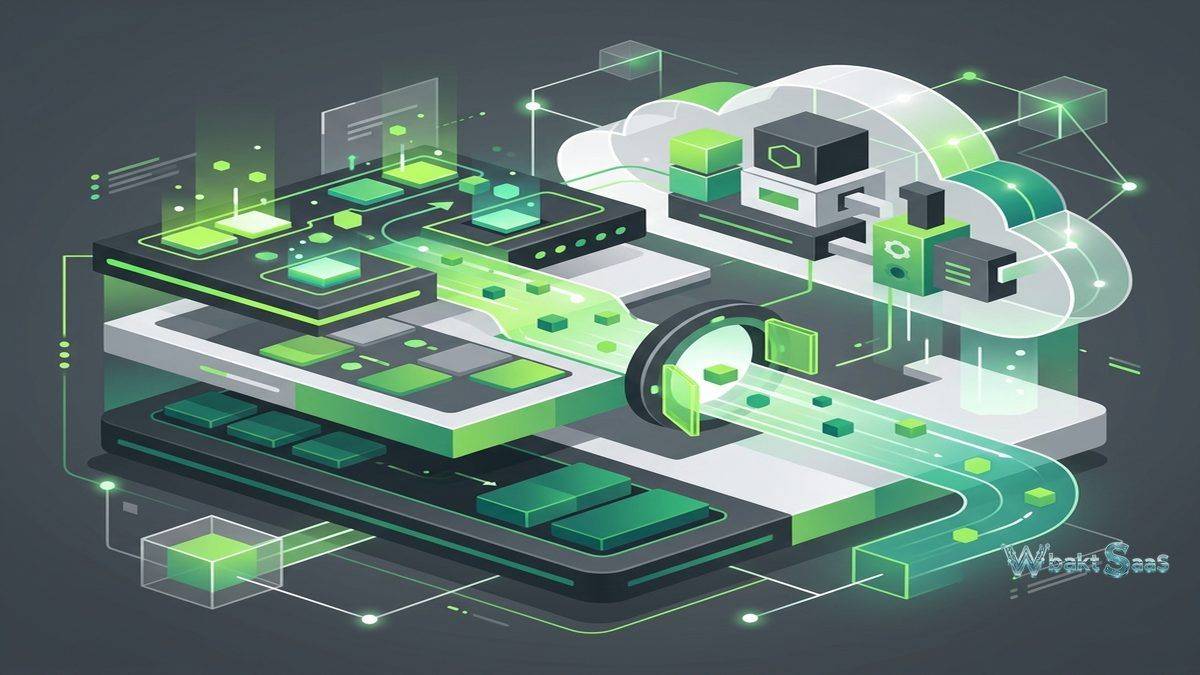
Cloud object storage pricing has historically followed a complex, multi-dimensional model where organizations pay not just for storage capacity but also for API requests, data retrieval, data transfer (egress), and minimum storage duration commitments. This pricing complexity makes cloud storage costs difficult to predict and budget, with organizations frequently experiencing unexpected charges from data retrieval fees, egress costs, and penalty charges for deleting data before minimum retention periods expire. Wasabi Hot Cloud Storage challenges this established pricing model by offering a radically simplified approach — a single, predictable per-terabyte storage price with no charges for egress bandwidth, API requests, or data retrieval. This pricing transparency has positioned Wasabi as a compelling alternative to Amazon S3, Google Cloud Storage, and Microsoft Azure Blob Storage for organizations that prioritize cost predictability alongside storage performance and reliability.
Founded in 2015 by David Friend and Jeff Flowers (the co-founders of Carbonite), Wasabi was created specifically to address cloud storage pricing frustration. The company’s founding thesis was that cloud storage had become unnecessarily expensive and unpredictably priced, and that a purpose-built cloud storage service could deliver enterprise-grade object storage at a fraction of the cost of major cloud platform providers. Wasabi achieves this through purpose-built storage infrastructure, operational efficiency, and a business model focused exclusively on storage rather than the broad portfolio of cloud services that Amazon, Google, and Microsoft offer. Understanding Wasabi’s capabilities, pricing model, and infrastructure helps organizations evaluate whether this cost-focused object storage platform meets their data storage requirements or whether the broader ecosystem integration of major cloud providers justifies their higher and more complex pricing structures.
Hot Cloud Storage
Wasabi provides a single storage tier — hot cloud storage — where all data is immediately accessible with low-latency performance comparable to Amazon S3 Standard. Unlike competing platforms that differentiate between hot, warm, cold, and archive storage tiers with different pricing, performance, and retrieval characteristics, Wasabi eliminates tier management complexity by providing a single performance level for all stored data. This approach means that organizations never need to implement lifecycle policies to transition data between tiers, never encounter retrieval delays when accessing archived data, and never face unexpected retrieval charges when accessing infrequently used data. The simplification benefit is substantial for organizations that find multi-tier storage management burdensome or for workloads where access patterns are unpredictable and data may need immediate access regardless of age.

Pricing Model
Wasabi’s pricing model charges exclusively for storage capacity with no additional fees for egress bandwidth, API requests, or data retrieval. Per-terabyte monthly pricing is typically 80% lower than Amazon S3 Standard pricing for equivalent storage capacity. The absence of egress fees is particularly significant for workloads that serve data to users, applications, or analytics platforms — scenarios where major cloud provider egress charges can equal or exceed storage costs. Minimum storage duration applies (typically 90 days for standard tiers), meaning that data deleted before the minimum retention period is charged as if stored for the full minimum period. This minimum retention is the primary pricing constraint, and organizations storing data for longer than the minimum period experience no penalty. The pricing predictability enables organizations to budget cloud storage costs with confidence, eliminating the cost variability that makes major cloud provider storage budgeting challenging.
S3 API Compatibility
Wasabi provides full compatibility with the Amazon S3 API, enabling integration with the vast ecosystem of tools, applications, backup software, and infrastructure designed for S3. Applications using the AWS SDK can connect to Wasabi by changing the endpoint URL and credentials without code modifications. This compatibility extends to S3 features including multipart upload, versioning, lifecycle policies, bucket policies, access control lists, and server-side encryption. For organizations considering migration from Amazon S3, the API compatibility eliminates application refactoring — existing S3-integrated workflows, backup tools, and applications work with Wasabi through simple configuration changes.
Data Immutability
Wasabi Object Lock provides immutable storage that prevents objects from being deleted or modified for specified retention periods. Compliance mode prevents any user, including account administrators and Wasabi support, from deleting locked objects before the retention period expires — meeting regulatory requirements for tamper-proof data retention. Governance mode allows privileged users to override protections when necessary while maintaining audit trails. Object Lock supports regulatory compliance for SEC Rule 17a-4, FINRA, CFTC, HIPAA, and other regulations requiring immutable data retention. For ransomware protection, immutable backup storage ensures that attackers cannot encrypt, delete, or corrupt backup data even with compromised administrative credentials.
Multi-Region Availability
Wasabi operates data centers across multiple global regions including the United States (multiple locations), Europe (Amsterdam, London, Frankfurt, Paris), Asia-Pacific (Tokyo, Osaka, Singapore, Sydney), and Canada (Toronto). Regional storage enables organizations to store data in specific geographic locations for data sovereignty compliance, latency optimization, and disaster recovery planning. Multi-region availability supports organizations operating across global geographies that need storage infrastructure close to their users, applications, and compliance jurisdictions. Each region operates independently with full S3 API compatibility, enabling organizations to distribute data across regions based on specific geographic and regulatory requirements.
Security
Wasabi encrypts all data at rest using AES-256 encryption and in transit using TLS/SSL. Server-side encryption supports Wasabi-managed keys and customer-managed keys for organizations requiring direct control over their encryption key material. Multi-factor authentication protects account access. Identity and Access Management (IAM) provides granular access control through users, groups, and policies that define permitted actions on specific storage resources. Bucket policies provide additional access control at the storage container level. Compliance certifications include SOC 2 Type II, HIPAA, and GDPR compliance. For organizations in regulated industries, Wasabi’s security architecture and compliance certifications provide the controls and documentation needed for regulatory compliance.
Integration Ecosystem
Wasabi’s S3 compatibility creates integration with a broad ecosystem of technology partners. Backup software integration includes Veeam, MSP360, Acronis, Commvault, Rubrik, Cohesity, and numerous other backup platforms that support S3-compatible storage targets. NAS integration includes Synology, QNAP, TrueNAS, and other NAS platforms that support cloud backup to S3-compatible storage. Media asset management tools integrate with Wasabi for cost-effective storage of large media libraries. Surveillance video storage platforms use Wasabi for affordable long-term retention of security camera footage. The breadth of integration validates Wasabi’s approach to commodity cloud storage that works with existing infrastructure rather than requiring proprietary tools and workflows.
Versioning
Bucket versioning preserves previous versions of objects, providing protection against accidental deletion and overwrite. When versioning is enabled, deleting an object creates a delete marker rather than permanently removing the data, and previous versions remain accessible for recovery. Version management through lifecycle policies controls retention of previous versions, enabling organizations to balance version history depth against storage cost. Combined with Object Lock, versioning creates comprehensive data protection that preserves data history while preventing unauthorized modification or deletion of protected versions.
Performance
Wasabi provides high-throughput storage with performance comparable to Amazon S3 Standard for upload and download operations. Data transfer speeds depend on network connectivity between the client and the Wasabi data center, with performance optimization through geographic proximity and parallel transfer techniques. Multipart upload enables efficient transfer of large objects by uploading multiple parts in parallel. For bandwidth-intensive workloads like media streaming, application data serving, and large-scale data distribution, Wasabi’s combination of competitive performance and zero egress fees creates a cost-performance profile that major cloud providers cannot match at equivalent pricing levels.
Monitoring and Management
The Wasabi Management Console provides web-based account administration including bucket creation, access management, storage monitoring, and billing visibility. Storage utilization dashboards show per-bucket and per-region storage consumption with historical trending. Access logging records detailed information about API requests for security monitoring, access auditing, and usage analysis. Billing dashboards provide real-time visibility into storage costs with predictable, capacity-based pricing that eliminates the surprise charges common with multi-dimensional cloud storage pricing. API-driven management enables programmatic administration for organizations automating infrastructure operations.
Migration Tools
Wasabi supports migration from competing cloud storage platforms through S3-compatible tools and utilities. Rclone, a popular open-source data transfer tool, provides efficient migration between S3-compatible services with parallel transfer, resumable operations, and bandwidth management. AWS CLI configured with Wasabi endpoints transfers data from Amazon S3 to Wasabi using familiar AWS tooling. Wasabi’s S3 API compatibility means that data migration does not require data transformation, format conversion, or application refactoring — data and metadata transfer directly between platforms. For large-scale enterprise migrations, Wasabi’s partner ecosystem includes certified migration service providers that manage complex migration projects involving petabytes of data.
Account and Sub-Account Management
Wasabi supports organizational account structures through sub-accounts that enable delegating storage management to departments, teams, or clients while maintaining centralized billing and administrative oversight. Sub-accounts operate with independent IAM policies, bucket configurations, and access controls while rolling up to the parent organization’s billing and compliance framework. For managed service providers (MSPs) offering storage services to clients, the sub-account model enables creating isolated storage environments for each client with independent access controls and usage reporting. Multi-tenancy through sub-accounts provides the organizational structure needed for enterprise and service provider deployments.
Data Replication and Durability
Wasabi stores data with eleven nines (99.999999999%) durability, matching the durability guarantees of Amazon S3. Data is replicated across multiple physical storage devices within each data center using erasure coding that distributes data and parity blocks across independent storage components. Cross-region replication enables copying objects between Wasabi regions for geographic redundancy, disaster recovery, and data sovereignty compliance. The combination of within-region erasure coding and cross-region replication provides multiple layers of data durability protection that safeguard against both device-level failures and facility-level disasters.
Managed Service Provider Program
Wasabi’s MSP partner program provides managed service providers with tools, pricing, and technical support for delivering cloud storage services to their clients. MSP pricing offers volume discounts that enable service providers to maintain healthy margins while delivering competitively priced storage services. White-label capabilities allow MSPs to brand Wasabi storage as their own service. Technical support and co-marketing resources help MSPs grow their storage service offerings. The MSP program has driven significant Wasabi adoption through the channel partner ecosystem, with MSPs incorporating Wasabi as the storage layer behind backup, disaster recovery, and archival services for their client base.
Compliance Details
Beyond SOC 2 Type II, HIPAA, and GDPR compliance, Wasabi supports data retention compliance through Object Lock immutability, access audit logging for regulatory examination, and geographic data storage controls for data sovereignty requirements. The combination of immutable storage, comprehensive audit trails, and geographic storage control provides the compliance infrastructure needed for financial services (SEC, FINRA, CFTC), healthcare (HIPAA), government, and other regulated industries. Wasabi provides Business Associate Agreements (BAA) for HIPAA-covered entities and has been validated for use in regulated data archival scenarios where tamper-proof storage and documented chain of custody are required.
Common Use Cases
Backup Target: Organizations use Wasabi as a cost-effective backup target for enterprise backup software (Veeam, Commvault, Rubrik, Acronis), replacing expensive primary cloud storage with affordable, high-performance cloud storage that significantly reduces ongoing backup infrastructure costs.
Media and Entertainment: Media companies store massive video, audio, and image libraries on Wasabi with affordable per-terabyte pricing and zero egress fees that make serving media content to production teams, post-production workflows, and distribution platforms economically viable at scale.
Surveillance Storage: Security camera systems store long-term video footage on Wasabi, leveraging affordable pricing for the massive storage volumes that continuous multi-camera surveillance generates over the extended retention periods required by regulation or organizational policy.
Data Archive: Organizations archive historical data, research datasets, regulatory records, and institutional knowledge on Wasabi with immediate access availability, replacing cold storage solutions that impose retrieval delays, unpredictable retrieval costs, and minimum retrieval charges.
Healthcare Imaging: Medical imaging facilities store DICOM imaging data (X-rays, MRIs, CT scans) on Wasabi with HIPAA compliance, immutable storage for regulatory retention requirements, and affordable pricing for the large per-patient storage volumes that medical imaging generates.
Education and Research: Universities and research institutions store research datasets, genomic sequencing data, climate modeling outputs, and institutional archives on Wasabi with predictable pricing that accommodates fixed research budgets and continuously growing data volumes.
Managed Service Providers: MSPs use Wasabi as the storage layer behind backup, disaster recovery, and archival services they offer to clients, leveraging volume pricing and sub-account management to deliver profitable storage services.
Pricing
Wasabi pricing is per terabyte per month with no egress fees, no API request charges, and no data retrieval costs. Pricing varies by region with the most competitive rates in US regions. Minimum storage duration of 90 days applies — data deleted before 90 days is charged for the full 90-day period. Volume discounts may be available for large-scale deployments. Reserved Capacity Storage (RCS) programs provide additional discounts for committed multi-year storage purchases. Free tier provides limited storage for evaluation and small-scale usage.
Pricing and features are subject to change. Please verify current pricing on the official Wasabi website before making purchasing or architecture decisions.
Limitations
- Storage only: Wasabi provides cloud storage exclusively, without the compute, database, analytics, and application services that major cloud platforms offer. Organizations needing integrated cloud services may find the storage-only model limiting.
- Minimum storage duration: The 90-day minimum storage charge penalizes short-term or temporary data storage, making Wasabi less cost-effective for transient data that is stored briefly and deleted.
- No storage tiering: The single hot storage tier means organizations cannot optimize costs by moving infrequently accessed data to lower-cost cold or archive tiers as they can with major cloud providers.
- Ecosystem dependency: Without native compute services, organizations using Wasabi for application data must manage cross-cloud data transfer between Wasabi storage and their compute infrastructure on other platforms.
- CDN integration: Wasabi does not provide native CDN services, requiring third-party CDN integration for content delivery optimization.
Summary
Wasabi provides cloud object storage that challenges the pricing complexity and cost levels established by major cloud platform providers. The simple, predictable per-terabyte pricing with no egress fees, no API charges, and no retrieval costs creates a storage economics model that is fundamentally different from the multi-dimensional pricing that makes Amazon S3, Google Cloud Storage, and Azure Blob Storage costs difficult to predict and control. For storage-intensive workloads where cost predictability matters — backup, media storage, surveillance, archival, and research data — Wasabi’s pricing advantage can reduce cloud storage expenses by 80% compared to equivalent major cloud provider pricing.
The S3 API compatibility ensures that Wasabi integrates with existing tools, applications, and workflows designed for Amazon S3, minimizing the migration effort and technical risk of switching storage platforms. Object Lock provides immutable storage for regulatory compliance and ransomware protection. Multi-region availability supports global data distribution and sovereignty requirements.
Cloud object storage platforms including Wasabi, Amazon S3, Google Cloud Storage, Azure Blob Storage, and Backblaze B2 each offer different pricing models, feature sets, and ecosystem integration. Wasabi’s advantages center on pricing simplicity, cost competitiveness, zero egress fees, S3 API compatibility, and the focused storage-only approach that enables operational efficiency and pricing transparency. Organizations evaluating cloud storage should consider their total cost of ownership — including egress, requests, and retrieval fees — when comparing platforms, as headline per-GB storage pricing often understates the true cost of cloud storage on platforms with multi-dimensional pricing models.
Features, pricing, and availability discussed in this review reflect information available at the time of writing. Cloud storage services evolve continuously, and details may have changed since publication. Please verify current information directly on the official Wasabi website. WBAKT SaaS is an independent review platform with no affiliate relationships with any cloud provider mentioned in this article.
For related tools, see our reviews of Amazon S3, Backblaze Backup, and Box Enterprise.
About the Author