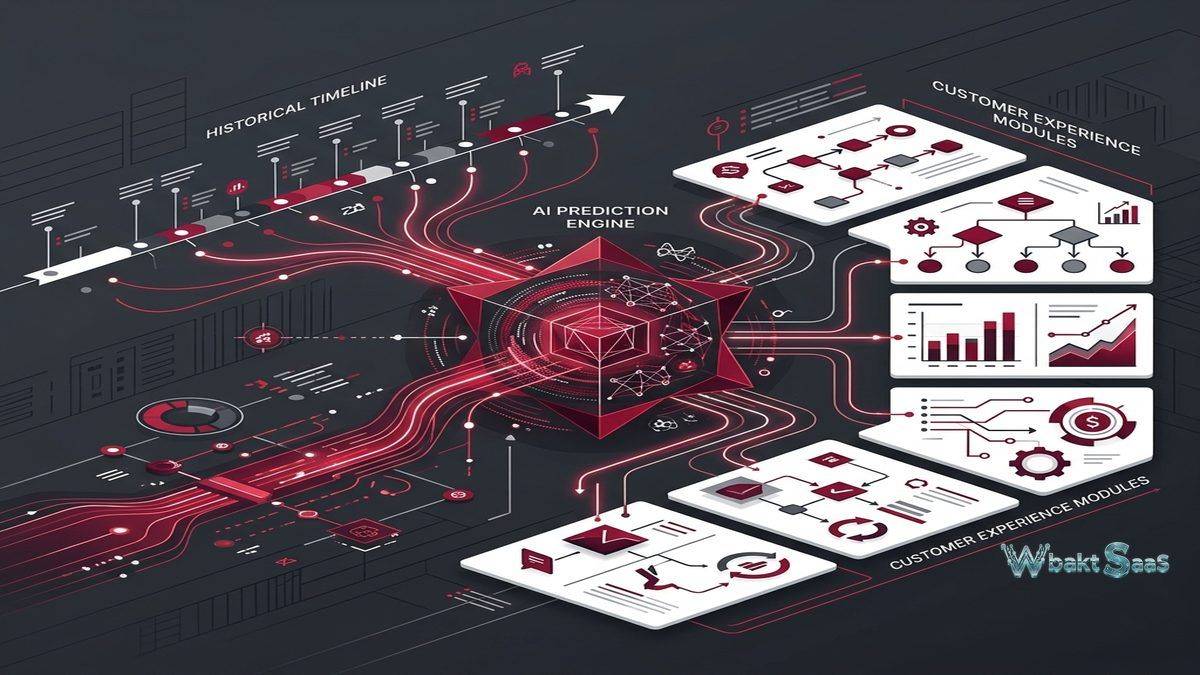
Most CRM platforms store current customer data — today’s contact information, the current deal stage, the most recent support ticket. But business relationships are shaped by history as much as by the present moment. A customer who experienced three service escalations before renewing their contract tells a different story than one who renewed without incident. A prospect who seriously considered your product two years ago but chose a competitor represents a different opportunity than a first-time inquiry. Traditional CRM systems capture snapshots of the present while losing the historical context that provides the deepest understanding of customer relationships. SugarCRM differentiates itself through what it calls “time-aware CRM” — a platform architecture that preserves and surfaces the complete historical context of every customer relationship, enabling businesses to understand not just where customer relationships stand today but how they evolved over time and where they are most likely to go next.
Originally launched in 2004 as an open-source CRM platform, SugarCRM has evolved into a powerful commercial enterprise customer experience platform that serves mid-market and enterprise organizations across industries. The platform provides three distinct core products — Sugar Sell for sales automation, Sugar Market for marketing automation, and Sugar Serve for customer service — designed to work together as an integrated customer experience platform. SugarCRM’s positioning emphasizes letting the platform do the work of data capture and analysis while enabling sales, marketing, and service professionals to focus on high-value human interactions rather than administrative CRM tasks. Thoroughly understanding SugarCRM’s capabilities helps mid-market organizations evaluate whether this time-aware, AI-enhanced approach provides the customer experience intelligence they need to compete effectively against larger competitors with more resources.
Sugar Sell – Sales Automation
Sugar Sell provides sales automation with visual pipeline management, opportunity tracking, quote management, forecasting, and AI-powered predictions. Pipeline views display deals in customizable kanban boards with drag-and-drop progression, multiple pipeline support, and filtered views by owner, stage, date, and custom criteria. Opportunity records store comprehensive deal data including value, probability, expected close date, products, competitors, decision makers, and activity history. Quote management creates professional quotes with product configuration, pricing rules, and approval workflows.
Advanced sales forecasting combines pipeline data with historical conversion patterns to generate revenue projections at individual, team, and organizational levels. Forecast categories and stages — commit, best case, pipeline, and closed — provide clearly differentiated views of revenue probability. Forecast adjustments enable managers to apply judgment-based modifications to algorithm-generated forecasts when qualitative factors affect deal likelihood beyond what historical data patterns capture.

Sugar Market – Marketing Automation
Sugar Market provides multi-channel marketing automation including email marketing, landing pages, forms, social media management, and marketing analytics. Campaign builder creates sophisticated multi-step nurture campaigns with conditional logic based on contact behaviors, attributes, and engagement patterns. Email builder provides intuitive drag-and-drop design, personalization, A/B testing, and deliverability optimization. Landing page builder creates conversion-optimized pages with forms, progressive profiling, and A/B testing capabilities.
Marketing analytics provide campaign performance tracking, lead attribution modeling, and ROI analysis that connects marketing investment to pipeline generation and revenue outcomes. Multi-touch attribution models distribute conversion credit across the marketing touchpoints that influenced each deal, providing significantly more accurate marketing ROI measurement than simple first-touch or last-touch attribution models. These attribution insights help marketing teams optimize budget allocation across channels and campaigns based on proven revenue impact.
Sugar Serve – Customer Service
Sugar Serve provides customer service capabilities including case management, comprehensive SLA tracking, knowledge base, self-service portal, and customer satisfaction measurement. Intelligent case routing distributes incoming service requests based on priority, category, customer segment, and agent expertise. SLA management tracks response and resolution commitments against defined service level agreements, escalating cases that approach or exceed SLA thresholds. Knowledge base provides searchable content for both agents and customers, significantly reducing case volume through effective self-service resolution while ensuring consistent response quality for agent-handled cases.
Time-Aware CRM
SugarCRM’s time-aware architecture preserves historical record states alongside current data, enabling users to see how records changed over time. While most CRM platforms overwrite field values when data changes (losing the previous value), SugarCRM maintains a complete audit trail that shows every change, when it occurred, and who made it. This comprehensive historical preservation is particularly valuable for understanding relationship evolution — seeing how deal values changed through negotiations, how contact roles evolved within organizations, how service patterns shifted over time, and how marketing engagement levels fluctuated across campaign cycles.
AI and Predictive Intelligence
SugarPredict provides AI-powered capabilities including predictive lead scoring, deal closure probability, churn prediction, and sentiment analysis. Predictive lead scoring uses machine learning to analyze historical conversion data and identify the characteristics that predict successful outcomes, automatically scoring incoming new leads based on their similarity to previously converted leads. Deal closure prediction analyzes pipeline data patterns to forecast which opportunities are most and least likely to close, enabling sales teams to focus attention on deals where engagement can influence outcomes.
Churn prediction identifies existing customers showing behavioral patterns that historically precede contract cancellation or non-renewal, providing service and account management teams with early warning signals that enable proactive retention intervention before customers reach the point of departure. Sentiment analysis evaluates communication tone across emails and support interactions, surfacing relationship health indicators that supplement structured CRM data with qualitative relationship intelligence.
Workflow Automation
SugarBPM provides business process management with visual workflow design, multi-step approval processes, conditional routing, scheduled actions, and process analytics. Workflows automate complex multi-step business processes — sales approval hierarchies, contract renewal sequences, escalation procedures, and cross-department handoffs — with detailed visual process maps that document and enforce organizational procedures. Process analytics track execution times, bottleneck identification, and completion rates, enabling continuous process optimization based on actual execution data.
Reporting and Dashboards
SugarCRM provides comprehensive reporting including pre-built reports, custom report builder, matrix reports, and scheduled report distribution. reports can query across all standard and custom CRM modules — contacts, accounts, opportunities, cases, campaigns — with filtering, grouping, and calculation capabilities. Configurable dashboard builder creates role-specific views with chart widgets, metric indicators, and activity feeds. Real-time dashboard updates ensure displayed data reflects current CRM status. Advanced reporting provides cross-module analytics that combine data from sales, marketing, and service for unified customer experience analysis.
Customization Platform
SugarCRM provides extensive customization through Studio (no-code customization), Module Builder (custom module creation), and developer-level platform APIs. Studio enables modifying fields, layouts, relationships, dropdown values, and business logic without writing code. Module Builder enables creating entirely new modules for tracking custom entities specific to the organization’s business model. The platform’s PHP-based architecture provides deep customization capabilities for organizations with development resources, enabling modifications that go beyond configuration into true platform extension.
Integration Architecture
SugarCRM integrates with enterprise systems through REST API, webhooks, and numerous pre-built connectors for popular platforms including Microsoft 365, Google Workspace, DocuSign, Zendesk, and accounting systems. Sugar Connect provides native email and calendar integration with Outlook and Gmail. Sugar Integrate (powered by Elastic.io) provides iPaaS capabilities for complex multi-system integration scenarios. The integration architecture supports both real-time and batch data synchronization patterns suitable for enterprise integration requirements.
Mobile CRM
Sugar Mobile provides native iOS and Android apps with offline access, contact management, opportunity tracking, case management, activity logging, and GPS-enabled features. Offline access enables full CRM usage in areas without network connectivity — meeting notes, contact updates, and activity logs synchronize when connectivity is restored. Mobile dashboards provide executive-level visibility into key business metrics from any location.
Security and Compliance
SugarCRM implements enterprise-grade security including role-based access control, team-based data sharing, field-level security, audit logging, IP access restrictions, and password policy enforcement. Flexible deployment options include SugarCloud (hosted) and on-premises installation for organizations requiring maximum control over data location and infrastructure management. Compliance features support GDPR, HIPAA, and industry-specific regulatory requirements.
Renewals Console
The renewals console provides a specialized interface for managing subscription and contract renewals, displaying upcoming renewal dates, contract values, renewal probability, and customer health indicators in a prioritized dashboard view. Renewal workflows carefully automate the outreach and approval processes that renewal management requires — sending renewal reminders, creating renewal opportunities, carefully routing approval requests for modified terms, and escalating at-risk renewals to account managers. For subscription-based businesses, the renewals console transforms contract renewal from a manual tracking exercise into a systematic, data-driven process that protects recurring revenue.
Account Management
Account records provide comprehensive organizational views that aggregate all contacts, opportunities, cases, activities, and history associated with each customer organization. Account hierarchies map parent-subsidiary relationships, enabling enterprise account management that understands complex organizational structures. Account health indicators combine engagement metrics, support activity, renewal status, and revenue trends into composite scores that identify accounts requiring attention before problems escalate to churn risk levels.
Console Views
Role-specific console views provide focused interfaces for sales representatives, service agents, and managers. Sales console displays pipeline, forecasts, and priority activities in an optimized selling interface. Service console presents ticket queues, SLA status, and customer context in an efficient support interface. Manager consoles show team performance metrics, pipeline health, and activity summaries in leadership dashboards. Console views reduce the interface complexity that occurs when all users access the same general-purpose CRM interface regardless of their role and daily workflow requirements.
Territory Management
Territory management defines geographic, industry, or account-based territories for sales team organization. Territory assignment rules automatically and intelligently route leads and accounts to appropriate territory owners. Territory-based reporting provides performance analysis by region, product line, or market segment. Territory hierarchy supports nested territory structures for organizations with complex geographic or vertical market organizational models.
Collaboration
Activity streams provide social-media-style communication within CRM records — team members post updates, share observations, @mention colleagues, and discuss account strategies within the context of specific contacts, opportunities, and cases. Comment threads maintain focused discussions attached to relevant records rather than scattered across email threads and messaging platforms. Collaboration features bridge the communication gaps between sales, marketing, and service teams by providing shared context within the customer records they collectively manage.
Data Import and Migration
SugarCRM provides enterprise-grade data import tools with CSV import, field mapping, duplicate checking, and data validation. Migration tools support transitions from Salesforce, Microsoft Dynamics, and other CRM platforms with relationship preservation and history migration. Professional services partners provide guided migration for complex data scenarios that involve custom objects, workflows, and integration configurations. Data quality tools automatically identify and merge duplicate records, standardize formatting, and validate data integrity across the CRM database.
Common Use Cases
Mid-Market Enterprise: Mid-market companies use SugarCRM as a comprehensive CRM platform that provides enterprise-grade functionality without the Salesforce-level complexity, cost, and implementation burden.
Manufacturing: Manufacturing companies use SugarCRM to manage dealer and distributor networks, track complex quote processes, coordinate warranty claims and service operations, and manage distributed sales across global teams and regional territories.
Financial Services: Financial services firms use SugarCRM’s time-aware capabilities, security features, and compliance tools to maintain regulatory-compliant client records with comprehensive relationship history and audit trails.
Technology Companies: Software and technology companies use the integrated Sugar Sell, Market, and Serve modules to manage the complete customer lifecycle from initial marketing engagement through subscription renewal and ongoing support.
Professional Services: Consulting and professional services firms use SugarCRM for account management, engagement pipeline tracking, resource coordination, and client relationship intelligence across multi-year advisory relationships.
Healthcare: Healthcare organizations use SugarCRM’s compliance capabilities and customization flexibility to manage patient relationships, provider networks, and regulatory documentation within a fully HIPAA-compliant CRM framework.
Insurance: Insurance companies use SugarCRM to manage policyholder relationships, track renewal pipelines, coordinate claims processes, and automate communication workflows across the insurance lifecycle from quote to claim.
Pricing
SugarCRM offers Essentials, Standard, Advanced, and Premier tiers with per-user, per-month pricing and annual contracts. Each tier adds features: Standard includes SugarBPM workflow automation, enhanced reporting, and email integration; Advanced adds SugarPredict AI, advanced forecasting, geo-mapping, and renewals console; Premier provides all features plus dedicated customer success management and premium SLA guarantees. Sugar Sell, Sugar Market, and Sugar Serve can be purchased separately or together as a fully integrated platform. Important minimum user counts apply to certain tiers. A guided demo and personalized consultation are available for evaluation.
Pricing and features are subject to change. Please verify current plan details on the official SugarCRM website before making purchasing decisions.
Limitations
- Small business fit: SugarCRM’s pricing, minimum user requirements, and complexity position it for mid-market and enterprise organizations. Small businesses may find the platform more complex and expensive than needed for basic CRM requirements.
- Implementation complexity: Full SugarCRM implementation typically requires professional services or certified partner assistance, adding cost and time beyond the subscription price for initial deployment.
- Ecosystem size: The third-party app and integration marketplace is significantly smaller than Salesforce’s AppExchange or HubSpot’s marketplace, potentially limiting pre-built solution availability.
- Learning curve: The platform’s extensive customization capabilities and feature depth create a meaningful learning curve for administrators and developers new to the SugarCRM architecture.
- Market position: SugarCRM competes against better-known platforms like Salesforce and HubSpot, which can create challenges in finding experienced implementation partners and certified administrators in some regions.
Summary
SugarCRM provides an intelligent customer experience platform that differentiates itself through time-aware CRM architecture, AI-powered predictions, and the integrated combination of sales, marketing, and service modules that create unified customer experience management. The time-aware approach to CRM data provides historical relationship intelligence that traditional snapshot-based CRM platforms simply cannot match, enabling organizations to understand relationship trajectories and make more informed decisions about customer engagement strategies based on the complete evolution of each relationship rather than just its current state.
The platform’s positioning between small business CRM tools and full enterprise-grade Salesforce creates distinctive value for mid-market organizations that need sophisticated CRM capabilities — including AI predictions, workflow automation, territory management, and renewals management — without the implementation complexity, consultant dependency, and ongoing administrative overhead that enterprise CRM platforms typically demand.
SugarPredict’s AI capabilities provide predictive intelligence — lead scoring, deal prediction, churn risk assessment, and sentiment analysis — that was previously available only in premium enterprise CRM tiers, democratizing AI-powered sales, marketing, and service insights for mid-market organizations that can benefit from data-driven predictions but lack the data science resources to build custom predictive models.
CRM platforms including SugarCRM, Salesforce, Microsoft Dynamics 365, HubSpot, and Zoho each serve different market segments with different architectural approaches and pricing models. SugarCRM’s advantages center on time-aware data architecture, AI predictions, mid-market positioning, customization flexibility, deployment options, and the fully integrated customer experience platform approach. Organizations evaluating CRM should consider whether SugarCRM’s time-aware intelligence and mid-market focus serve their requirements more effectively than simpler small business CRM tools or more complex and costly enterprise platforms.
Features, pricing, and availability discussed in this review reflect information available at the time of writing. Software products evolve continuously, and details may have changed since publication. Please verify current information directly on the official SugarCRM website. WBAKT SaaS is an independent review platform with no affiliate relationships with any software company mentioned in this article.
For related CRM tools, see our reviews of Salesforce CRM, HubSpot CRM, and Zoho CRM Suite.
About the Author