Customer relationship management sits at the operational core of modern business — the system of record that tracks every single interaction between an organization and its valuable customers, prospects, and partners. When CRM implementation succeeds, sales teams close more deals with better visibility, service teams resolve issues faster with complete customer context, and marketing teams target campaigns with precision informed by actual customer data. When CRM implementation fails — through poor adoption, inadequate customization, or misalignment with business processes — organizations lose visibility into their pipeline, duplicate efforts across teams, and make strategic decisions based on incomplete or inaccurate customer information.
Salesforce has dominated the CRM market since Marc Benioff founded the company in 1999 with the vision of delivering enterprise software through the cloud rather than through expensive on-premise installations. That groundbreaking cloud-first approach, considered truly revolutionary at the time of its introduction, has since become the universally accepted standard delivery model for modern enterprise software. Today Salesforce serves over 150,000 companies worldwide, from small businesses to Fortune 500 enterprises, and has expanded far beyond traditional CRM into a comprehensive business platform encompassing sales, service, marketing, commerce, analytics, and application development. Comprehensively understanding Salesforce’s capabilities, complexity, and ecosystem helps organizations evaluate whether this platform’s breadth and depth justify the significant investment it requires in licensing, implementation, and ongoing administration.
Sales Cloud
Sales Cloud is Salesforce’s core CRM product for sales team management, providing the essential tools that sales representatives, sales managers, regional directors, and executives use daily to manage customer relationships, track deals through the sales pipeline, and forecast revenue. The fundamental data model organizes information around Leads (potential customers who have not yet been qualified), Contacts (individual people), Accounts (companies or organizations), and Opportunities (potential deals being pursued). This structured relationship model ensures that every customer interaction, communication, and transaction is recorded in context rather than scattered across individual email inboxes and spreadsheets.
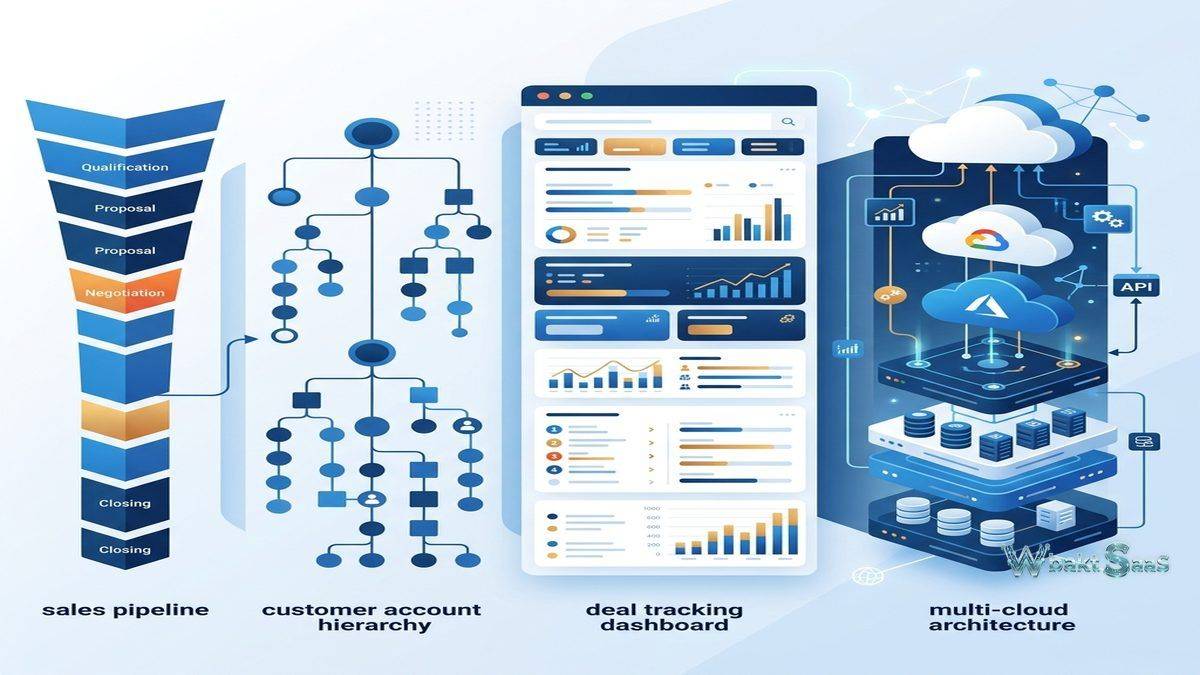
Pipeline management visualizes the sales process through customizable stages that reflect the organization’s actual selling methodology — whether that follows BANT, MEDDIC, Challenger Sale, or a custom qualification framework. Stage-based probability weighting enables accurate and reliable pipeline forecasting that estimates expected revenue based on the statistical likelihood of deals closing at each stage. Pipeline forecast accuracy improves measurably over time as historical win rate data refines probability assumptions for each pipeline stage.
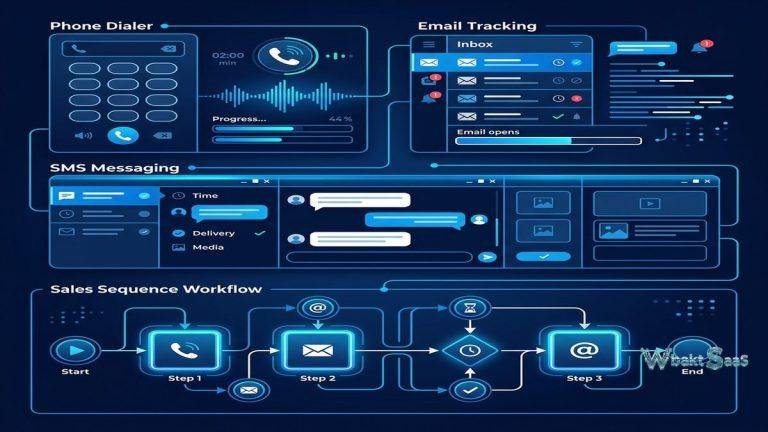
Activity tracking records calls, emails, meetings, and tasks associated with each contact, account, and opportunity, creating a comprehensive timeline of every customer interaction. Email integration with Outlook and Gmail synchronizes email correspondence directly into Salesforce records, ensuring that the complete customer communication history remains fully accessible to the entire team rather than locked in individual inboxes. Activity metrics help sales managers identify which representatives maintain healthy activity levels and which may need coaching or support.
Service Cloud
Service Cloud provides customer service and support functionality including case management, knowledge base, omnichannel routing, and field service management. Case management tracks customer issues from initial report through investigation and resolution, maintaining the complete history of communications, escalations, and resolution steps. Service Level Agreement (SLA) management monitors response and resolution times against contractual commitments, alerting agents and managers when cases approach SLA breach thresholds.
Omnichannel routing distributes incoming service requests — from phone, email, chat, social media, and web forms — to available agents based on skill matching, workload balancing, and priority rules. Knowledge base management creates and organizes articles that help both agents and customers find answers to common questions, reducing case volume through self-service deflection while ensuring consistent information across service channels.
Marketing Cloud
Marketing Cloud provides enterprise marketing automation capabilities including email marketing (Email Studio), social media management (Social Studio), advertising (Advertising Studio), mobile messaging (Mobile Studio), and customer journey orchestration (Journey Builder). Journey Builder creates automated, multi-step marketing campaigns that respond to customer behaviors — triggering personalized email sequences when customers abandon shopping carts, visit specific web pages, or reach milestone dates in their customer lifecycle.
Marketing Cloud Account Engagement (formerly Pardot) serves B2B marketing specifically, providing lead scoring, lead nurturing, ROI reporting, and sales-marketing alignment features designed for longer B2B sales cycles where marketing’s role extends across months of prospect engagement before sales conversion occurs.
Einstein AI
Salesforce Einstein embeds artificial intelligence capabilities across the platform. Einstein Lead Scoring predicts which leads are most likely to convert based on historical conversion patterns. Einstein Opportunity Scoring estimates deal close probability using signals beyond simple stage-based probability. Einstein Activity Capture automates the logging of emails and calendar events that representatives would otherwise need to manually record. Einstein Analytics provides AI-powered insights that surface patterns and anomalies in CRM data that manual analysis might miss.
Einstein GPT brings generative AI capabilities to Salesforce, enabling AI-generated email drafts, meeting summaries, case response suggestions, and personalized marketing content. These generative capabilities accelerate routine communication tasks while maintaining the personalization that effective customer engagement requires. However, AI-generated content should be reviewed and refined by human professionals before sending to ensure accuracy, brand voice consistency, and appropriate tone for the specific customer relationship context.
AppExchange Ecosystem
AppExchange is Salesforce’s marketplace of third-party applications and integrations, offering thousands of pre-built solutions that extend Salesforce functionality. Categories include document generation, electronic signature, data enrichment, project management, accounting integration, communication tools, and industry-specific solutions. The AppExchange ecosystem means that many business requirements can be addressed through existing applications rather than custom development, significantly reducing implementation time and cost for common needs.
Integration partnerships with major enterprise software vendors — DocuSign, Slack, Tableau, MuleSoft, Jira, SAP — ensure that Salesforce can connect with the broader technology ecosystem that organizations already use. MuleSoft (acquired by Salesforce) provides enterprise integration capabilities that connect Salesforce with on-premise systems, legacy databases, and other cloud applications through API-based integration patterns.
Reporting and Dashboards
Salesforce’s reporting engine creates custom reports from any combination of CRM data — pipeline reports, activity reports, forecast reports, case resolution reports, campaign performance reports, and cross-object reports that combine data from multiple related records. Report types define the data relationships available for reporting, while filters, groupings, and summary formulas provide the analytical flexibility needed to answer specific business questions.
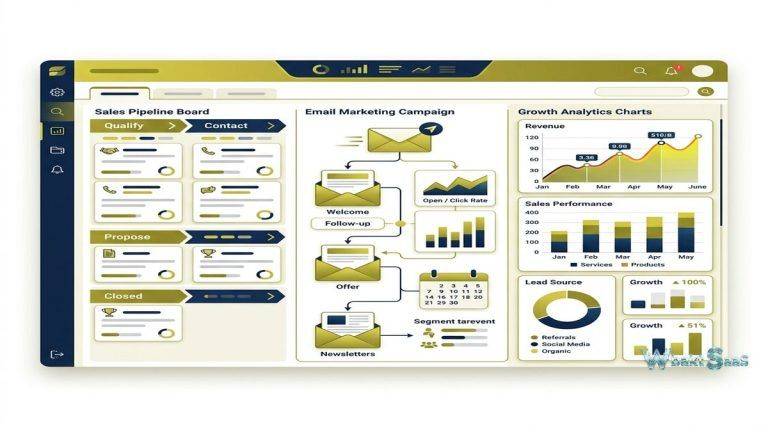
Dashboards present report data through visual components — charts, gauges, tables, and metrics — that provide at-a-glance performance visibility for executives, managers, and individual contributors. Dynamic dashboards show data filtered to the viewing user’s perspective, ensuring that each user sees the metrics most relevant to their role and responsibility scope without requiring separate dashboard creation for each user.
Platform Customization
Salesforce’s platform extensibility enables deep customization through declarative tools (point-and-click configuration) and programmatic development (Apex code and Lightning components). Custom objects extend the data model beyond standard CRM entities, enabling organizations to track any business-relevant information — projects, assets, contracts, certifications, or industry-specific entities — within the Salesforce platform. Process Builder and Flow automate business processes through visual configuration rather than code, enabling administrators to create sophisticated workflows without developer involvement.
Lightning App Builder enables creating custom page layouts and applications through drag-and-drop component arrangement. Custom Lightning components built with Aura or Lightning Web Components (LWC) provide complete flexibility for organizations that need interface capabilities beyond the standard component library.
Commerce Cloud
Commerce Cloud provides B2C and B2B e-commerce capabilities that integrate directly with CRM data. B2C Commerce enables creating personalized online shopping experiences informed by customer relationship data — showing returning customers relevant product recommendations based on their purchase history, service interactions, and browsing behavior. B2B Commerce serves wholesale and distribution businesses with complex pricing, bulk ordering, and account-based purchasing workflows that consumer-focused e-commerce platforms cannot accommodate. The integration between Commerce Cloud and the broader Salesforce ecosystem ensures that commerce transactions enrich the customer record alongside sales and service interactions.
Experience Cloud
Experience Cloud (formerly Community Cloud) enables creating branded digital experiences — customer portals, partner portals, help centers, and community forums — that extend Salesforce data and functionality to external users. Customer portals provide self-service access to case tracking, knowledge articles, and account information, reducing service volume while improving customer experience. Partner portals enable channel partners to register deals, access marketing resources, and manage their pipeline within the vendor’s Salesforce ecosystem.
Slack Integration
Following Salesforce’s acquisition of Slack in 2021, deep integration between Salesforce CRM and Slack messaging enables teams to collaborate on customer-related activities within their communication workflow. Salesforce records — accounts, opportunities, cases — can be viewed and updated directly from Slack channels, and automated Slack notifications alert team members when CRM events require attention. This integration bridges the gap between the structured data in CRM and the real-time collaboration that customer-facing teams need to coordinate responses and strategies.
Data Cloud
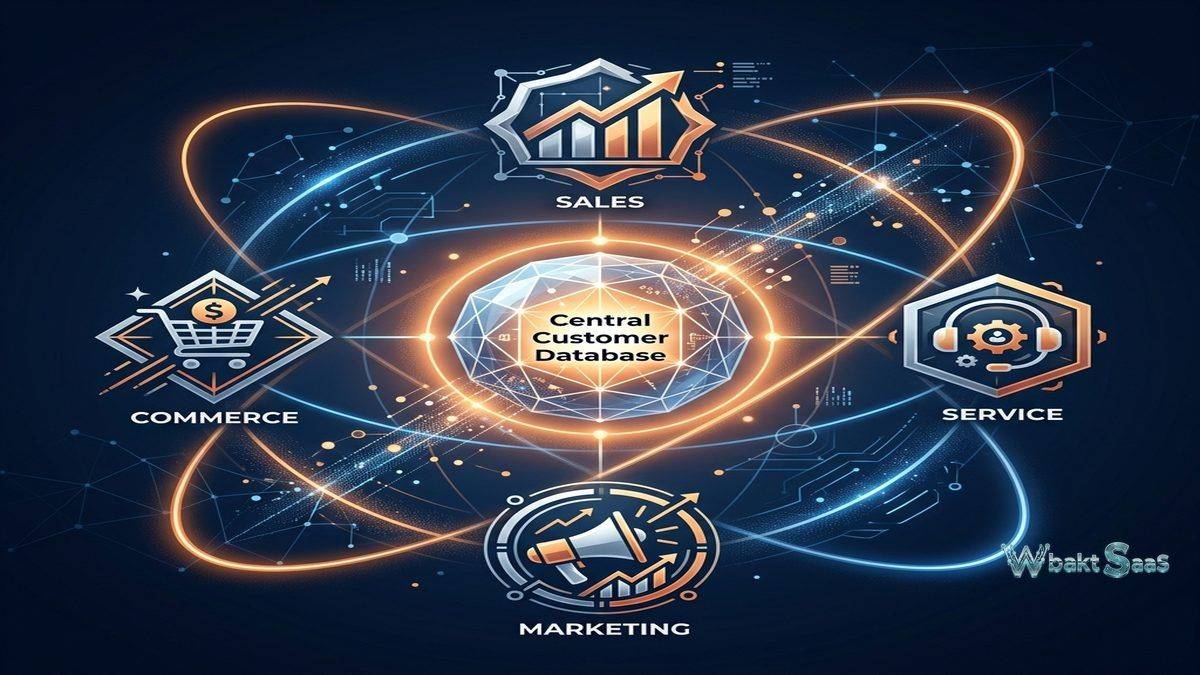
Salesforce Data Cloud (formerly Customer Data Platform) unifies customer data from multiple sources into a single, real-time customer profile. Data Cloud ingests data from websites, mobile apps, connected devices, data lakes, and third-party systems, resolving identities across sources to create comprehensive customer profiles that inform personalization, segmentation, and engagement strategies across every Salesforce cloud. This unified profile eliminates the fragmented customer view that organizations experience when customer data is scattered across disconnected systems.
Mobile Application
The Salesforce mobile app provides field access to CRM data and functionality on iOS and Android devices. Mobile-optimized layouts ensure that critical information — upcoming meetings, pipeline updates, customer details, and task lists — is accessible and actionable from mobile devices. Offline capabilities cache essential data for access in areas without connectivity, synchronizing changes when connectivity is restored. For sales teams that spend significant time traveling or meeting customers in the field, mobile CRM access ensures that customer information and deal updates remain current regardless of location.
Security and Compliance
Salesforce provides enterprise-grade security including role-based access control, field-level security, record-level sharing rules, audit trails, and encryption at rest and in transit. Compliance certifications include SOC 1, SOC 2, ISO 27001, HIPAA, FedRAMP, and GDPR compliance features. Salesforce Shield adds enhanced security capabilities including Platform Encryption, Event Monitoring, and Field Audit Trail for organizations with the most stringent data protection requirements. Trust.salesforce.com provides real-time system status and security information.
Administration and Governance
Salesforce administration requires dedicated expertise to manage user provisioning, permission configuration, data quality, workflow automation, report creation, and platform updates. Most organizations with significant Salesforce deployments employ dedicated Salesforce administrators, and many also engage Salesforce architects and developers for advanced customization. The Salesforce certification program — Administrator, Advanced Administrator, Platform Developer, Architect — establishes competency standards for professionals managing and extending the platform.
Common Use Cases
Enterprise Sales Management: Large sales organizations use Sales Cloud to manage complex selling processes involving multiple stakeholders, long sales cycles, and territory-based team structures with hierarchical forecasting.
Customer Service Operations: Service organizations use Service Cloud to manage high-volume case loads across multiple channels with SLA tracking, knowledge management, and customer satisfaction measurement.
B2B Marketing Automation: B2B marketing teams use Marketing Cloud Account Engagement for lead nurturing, scoring, and campaign management that aligns marketing activity with sales pipeline progression.
Industry Solutions: Salesforce offers industry-specific solutions for healthcare, financial services, manufacturing, retail, government, and nonprofit sectors that provide pre-configured data models and workflows tailored to industry requirements.
Digital Commerce: Retailers and B2B distributors use Commerce Cloud to create personalized online shopping experiences that integrate with CRM data, enabling commerce interactions to inform and be informed by the complete customer relationship.
Partner Relationship Management: Organizations managing channel partner networks use Experience Cloud to create partner portals where partners register deals, access marketing resources, and collaborate on joint opportunities within the vendor’s CRM ecosystem.
Tableau Analytics
Salesforce’s acquisition of Tableau brought enterprise-grade data visualization and business intelligence capabilities into the Salesforce ecosystem. Tableau connects to virtually any data source — databases, spreadsheets, cloud services, and Salesforce CRM data — and enables creating interactive visualizations and dashboards that reveal patterns, trends, and insights across business data. Tableau’s analytical capabilities extend Salesforce’s native reporting significantly, providing the advanced data exploration and visualization that enterprise analytics requirements demand.
Pricing
Salesforce pricing is per-user, per-month, with multiple editions at different price points — Essentials, Professional, Enterprise, and Unlimited for Sales Cloud and Service Cloud. Each edition adds features and capabilities, with Enterprise and Unlimited editions providing the customization depth and advanced features that larger organizations typically require. Additional clouds (Marketing, Commerce, Analytics) are priced separately, and the total cost of ownership can scale significantly for organizations deploying multiple clouds across large user bases. Implementation costs, consulting fees, and ongoing administration expenses should be factored into total cost projections alongside licensing.
Pricing and features are subject to change. Please verify current plan details on the official Salesforce website before making purchasing decisions.
Limitations
- Complexity: Salesforce’s breadth creates significant implementation complexity. Successful deployment typically requires certified administrators and often external consulting partners.
- Cost: Total cost of ownership including licensing, implementation, customization, integration, training, and ongoing administration can be substantial, particularly for smaller organizations.
- Learning curve: The platform’s extensive functionality creates a steep learning curve for new users. User adoption challenges are the most common reason Salesforce implementations underperform expectations.
- Performance: Heavily customized instances with large data volumes can experience performance challenges that require optimization expertise to resolve.
- Configuration debt: Organizations that accumulate years of customization without governance can develop technical debt that makes further changes difficult and expensive.
Summary
Salesforce provides the most comprehensive CRM platform available, offering capabilities that span sales, service, marketing, commerce, analytics, and platform development. The platform’s breadth enables organizations to consolidate customer-facing operations onto a single platform with unified customer data, eliminating the data silos and integration challenges that arise from operating separate systems for each business function.
The Salesforce ecosystem — AppExchange applications, certified consultants, implementation partners, and trained administrators — creates a support infrastructure that no other CRM platform can match. This ecosystem reduces implementation risk by providing proven solutions, experienced practitioners, and community knowledge resources that accelerate deployment and optimization.
The platform’s value increases with organizational scale and complexity. Small businesses with straightforward sales processes may find Salesforce’s complexity and cost disproportionate to their needs, while enterprise organizations with complex selling processes, multi-channel service operations, and sophisticated marketing requirements extract substantial value from the platform’s depth and ecosystem breadth.
CRM platforms including Salesforce, HubSpot CRM, Microsoft Dynamics 365, Zoho CRM, and Pipedrive each serve different market segments with different complexity and cost profiles. Salesforce’s advantages center on platform breadth, customization depth, ecosystem size, and enterprise scalability. Organizations evaluating CRM platforms should consider their current complexity, growth trajectory, integration requirements, and the internal technical capacity available for platform administration and ongoing optimization.
Features, pricing, and availability discussed in this review reflect information available at the time of writing. Software products evolve continuously, and details may have changed since publication. Please verify current information directly on the official Salesforce website. WBAKT SaaS is an independent review platform with no affiliate relationships with any software company mentioned in this article.
For related CRM and business tools, see our reviews of HubSpot Marketing Hub, Google Analytics 4, and LinkedIn Campaign Manager.
About the Author