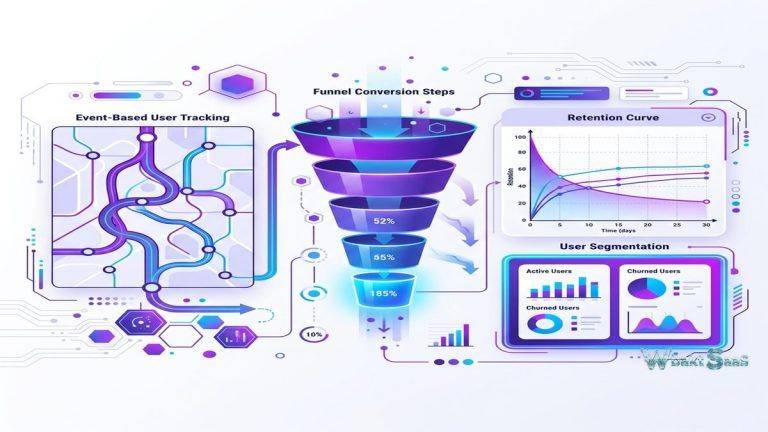
Search engine optimization requires comprehensive data about the competitive landscape — which websites rank for target keywords, what backlink profiles support those rankings, how competitors structure their content, and where technical SEO issues prevent a website from reaching its ranking potential. Ahrefs has established itself as one of the most data-rich SEO platforms available, building its reputation on what many practitioners consider the most comprehensive backlink index in the industry and expanding into keyword research, content analysis, site auditing, and rank tracking that together provide a complete SEO intelligence toolkit.
Founded in 2010, Ahrefs began as a backlink analysis tool and has progressively expanded into a full-service SEO platform that competes directly with SEMrush, Moz, and Majestic across all major SEO capability areas. The platform’s web crawler, AhrefsBot, is one of the most active crawlers on the internet, continuously indexing pages and discovering links to maintain a backlink database of trillions of known links. This extensive crawling infrastructure provides the foundational data that powers Ahrefs’ competitive analysis, keyword research, and content discovery features. Understanding Ahrefs’ capabilities helps SEO professionals and marketing teams evaluate whether this platform’s data depth and analytical tools best serve their search optimization requirements.
Site Explorer
Site Explorer is Ahrefs’ flagship tool, providing comprehensive analysis of any website’s organic search performance and backlink profile. Entering a domain, subdomain, or specific URL reveals organic search traffic estimates, top-performing pages, organic keyword rankings, backlink profile metrics, and referring domain analysis. This competitive intelligence enables SEO professionals to understand exactly how competitors achieve their search visibility — which pages rank, what keywords drive traffic, and which backlinks support their authority.
The backlink profile section displays every known backlink pointing to the analyzed domain, including the linking page’s URL, anchor text, link type (dofollow/nofollow/UGC/sponsored), Domain Rating of the linking site, first-seen and last-seen dates, and the page from the analyzed domain that receives the link. This granular backlink data enables link-by-link competitive analysis — understanding not just how many backlinks a competitor has, but specifically where those links come from and what anchor text patterns they establish.
The Organic Keywords report shows every keyword for which the analyzed domain ranks in Google’s organic results, with position, search volume, keyword difficulty, traffic estimate, and SERP features present. Sorting by traffic reveals which keywords drive the most visitors, while filtering by position ranges shows opportunities where the domain ranks on page two (positions 11-20) and might reach page one with targeted optimization. The Top Pages report ranks pages by estimated organic traffic, identifying the content assets that contribute most to the domain’s search visibility.
Referring Domains analysis provides a domain-level view of the backlink profile, showing how many unique websites link to the analyzed domain. The distinction between total backlinks and referring domains is critical: 100 links from 5 domains indicates concentrated link sources, while 100 links from 80 domains indicates a diverse, natural-looking backlink profile. New and lost referring domain tracking monitors how the backlink profile changes over time, alerting to link acquisition successes and link loss situations that may need attention.
Keywords Explorer
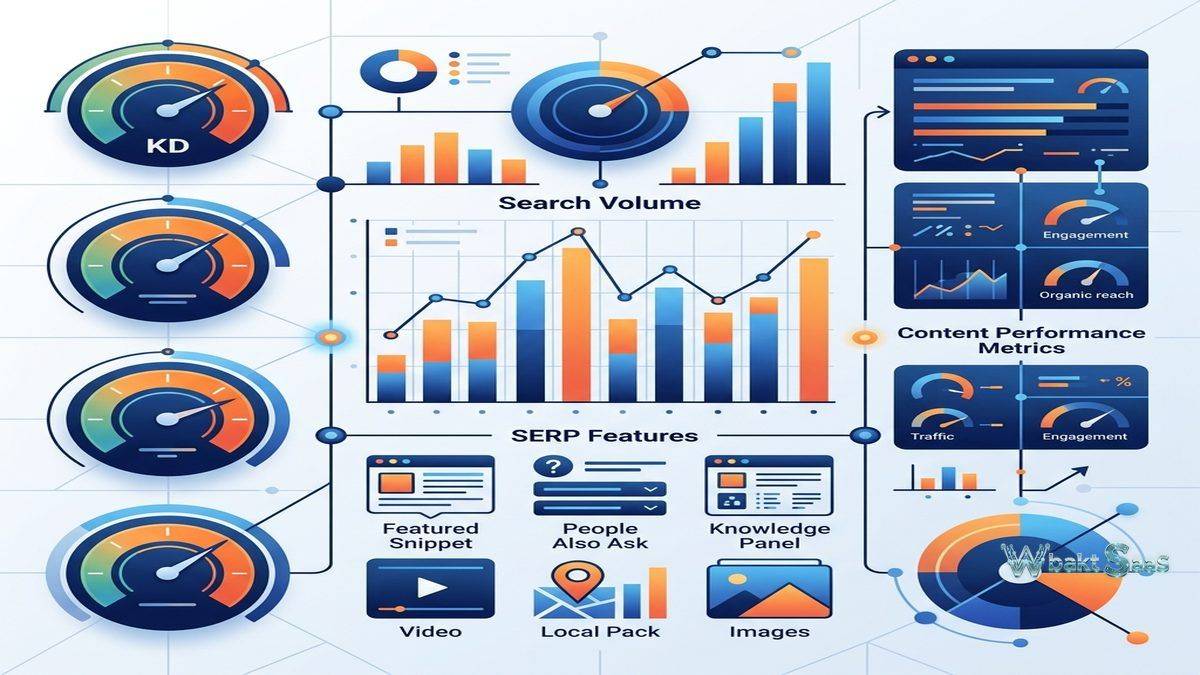
Keywords Explorer provides keyword research data for Google, YouTube, Amazon, Bing, Yahoo, Baidu, and other search engines. For each keyword, the tool displays search volume, keyword difficulty score, click metrics (estimated clicks including and excluding SERP features), cost-per-click data, return rate (how often searchers search for the same term again), and parent topic identification (grouping related keywords under broader topic umbrellas).
Ahrefs’ keyword difficulty score is based on the number of referring domains linking to the top-10 ranking pages — a methodology that directly reflects the backlink investment required to compete for a keyword rather than relying on abstract authority scores. This backlink-based difficulty metric provides actionable guidance: if the top-ranking pages for a keyword average 50 referring domains, a new page would likely need a similar backlink profile to compete effectively.
Keyword ideas generation expands seed keywords into comprehensive lists of related terms using multiple discovery methods: phrase match, having same terms, questions, also rank for, and newly discovered keywords. The “Also rank for” report reveals keywords that pages ranking for the seed keyword also rank for, indicating topical associations that inform content planning and keyword clustering strategies.
Content Explorer
Content Explorer searches a database of billions of web pages to find content that matches keyword queries, providing performance metrics for each discovered piece. Content analysis reveals social share counts, organic traffic estimates, referring domain counts, and domain authority for every matching page. This content intelligence serves multiple purposes: identifying successful content formats for competitive benchmarking, finding link-building opportunities by discovering authoritative pages in related niches, and analyzing content gaps where audience interest exists but quality content supply is limited.
Content Explorer’s filtering capabilities narrow results by publication date, language, domain rating, word count, organic traffic level, and referring domain count. Filtering for recently published pages with high organic traffic reveals emerging content opportunities. Filtering for pages with many referring domains but declining traffic identifies link-building targets where existing authoritative content may need updating — creating opportunities for outreach where original authors might link to updated competitor content.
The “One article per domain” filter ensures diverse results rather than showing multiple pages from a single dominant domain. Highlight unlinked mentions identifies content that references a brand or topic without linking to it — these unlinked mentions represent high-probability link acquisition targets where the author has already demonstrated interest in the topic and may be willing to add a relevant link when contacted with a polished outreach message.
Site Audit
Ahrefs Site Audit crawls websites to identify technical SEO issues including broken links, redirect chains, duplicate content, missing meta tags, slow page load times, orphan pages, and indexing problems. The crawler processes websites at configurable speeds and depths, with scheduling options for automated periodic audits that track technical health over time. Issue severity classification prioritizes critical problems that directly impact search visibility over minor warnings that represent optimization opportunities.
The Health Score metric provides a single number summarizing overall technical SEO health, making it easy to track improvement over time and benchmark against previous audit results. Issue categorization groups problems by type — performance, HTML tags, social tags, content quality, redirects, and links — enabling systematic remediation by technical issue category rather than addressing problems in random order. Core Web Vitals monitoring within the audit identifies pages that fail Google’s page experience performance thresholds, connecting technical SEO improvement with user experience optimization requirements. JavaScript rendering analysis detects pages where important content is loaded dynamically and may not be visible to search engine crawlers.
Rank Tracker
Ahrefs Rank Tracker monitors keyword ranking positions across Google desktop and mobile results for specified target keywords. Tracking frequency, location targeting (country, state, city), and SERP feature monitoring provide comprehensive visibility into search ranking performance. Competitor comparison tracks how ranking positions compare against specified competitor domains for the same keyword set.
SERP feature tracking monitors which SERP features appear for tracked keywords — featured snippets, People Also Ask boxes, knowledge panels, image packs, video results, and local packs — and whether the tracked domain appears in those features. As SERP features increasingly dominate search results, understanding feature presence is as important as understanding position rankings for evaluating true search visibility.
Common Use Cases
Link Building: SEO teams use Site Explorer to analyze competitor backlink profiles, identify linking opportunities, and develop outreach strategies targeted at websites that link to competitors but not to their own domain. Content Explorer finds authoritative content in related niches for resource page and broken link building campaigns.
Competitive Analysis: Marketing teams use Ahrefs to understand competitor SEO strategies comprehensively — which keywords they target, which content performs best, where their backlinks come from, and how their technical SEO compares. This intelligence informs SEO strategy development and competitive positioning.
Content Strategy: Content teams identify high-value keyword opportunities through Keywords Explorer, analyze competitor content performance through Content Explorer, and discover content gaps where audience demand exists but quality content supply does not meet it. Data-driven content planning replaces intuition with evidence-based topic selection.
Technical SEO: Development and SEO teams use Site Audit to identify and remediate technical issues that prevent search engines from properly crawling, indexing, and ranking website content. Scheduled audits monitor technical health continuously rather than relying on periodic manual reviews.
Agency Reporting: SEO agencies use Rank Tracker and Site Explorer to generate client-facing reports that demonstrate ranking improvements, traffic growth, and backlink profile development. Multi-project management supports agency workflows with multiple client accounts.
Free Tools
Ahrefs offers several free SEO tools that provide limited access to the platform’s data: Webmaster Tools (limited Site Explorer and Site Audit for verified properties), Keyword Generator, Backlink Checker, SERP Checker, and Website Authority Checker. These free tools introduce users to Ahrefs’ data quality and interface while providing genuinely useful capabilities for basic SEO research.
Web Explorer
Ahrefs Web Explorer searches across a vast index of web pages, functioning as a search engine for SEO professionals. Unlike Content Explorer which focuses on content performance metrics, Web Explorer enables searching the raw web index with advanced operators for finding specific page types, content patterns, and link opportunities. SEO professionals use Web Explorer for prospecting link building targets, finding guest posting opportunities, discovering resource pages, and identifying websites in specific niches that may not appear in traditional search results.
Domain Comparison and Batch Analysis
Domain Comparison allows side-by-side comparison of up to five domains across key SEO metrics — Domain Rating, referring domains, organic keywords, organic traffic, and backlink growth trends. This comparison view simplifies competitive benchmarking by presenting key metrics in a unified interface rather than requiring separate analysis of each competitor domain.
Batch Analysis processes lists of URLs or domains simultaneously, returning key metrics for each entry in a consolidated report. This bulk processing capability supports large-scale link prospecting, competitive research, and content audit workflows where analyzing hundreds of URLs individually would be impractical. Batch Analysis accelerates workflows that require evaluating many potential link targets, content opportunities, or competitive pages in a single operation.
SEO Toolbar
The Ahrefs SEO Toolbar is a browser extension that overlays Ahrefs metrics directly on Google search results pages and individual web pages. For each search result, the toolbar displays Domain Rating, URL Rating, estimated organic traffic, and backlink count — providing instant competitive context while browsing search results. On individual pages, the toolbar shows on-page SEO factors including title tag length, meta description, heading structure, and word count, enabling rapid on-page SEO assessment without leaving the browsed page.
Dashboard and Alerts
The Ahrefs Dashboard provides an overview of tracked projects with key metric summaries — Domain Rating changes, new and lost backlinks, ranking position movements, and health score trends. Customizable dashboards allow organizing monitored projects by priority, client, or campaign for efficient multi-project management.
Email alerts notify users of important changes: new backlinks discovered, lost backlinks, keyword ranking movements, brand mentions across the web, and new competing pages. These proactive notifications ensure that SEO professionals are aware of significant changes in their competitive landscape and link profile without requiring manual monitoring of every tracked metric.
API Access
The Ahrefs API provides programmatic access to Site Explorer, Keywords Explorer, and other data sources for custom integrations, automated reporting, and data pipeline construction. API access enables organizations to build custom SEO dashboards, automated monitoring systems, and integration with proprietary tools that combine Ahrefs data with other business intelligence sources. Enterprise and agency users leverage the API for automated client reporting and competitive monitoring at scale.
Pricing
Ahrefs pricing follows tiered plans — Lite, Standard, Advanced, and Enterprise — that progressively increase data limits, tracked keyword capacity, crawl credits, user seats, and API access. Unlike some competitors that restrict core features to higher tiers, Ahrefs provides access to all major tools on all paid plans, differentiating tiers primarily by data volume limits rather than feature availability.
Pricing and features are subject to change. Please verify current plan details on the official Ahrefs website before making purchasing decisions.
Limitations
- No advertising intelligence: Unlike SEMrush, Ahrefs does not include PPC research, advertising analysis, or social media management features. Organizations needing paid search intelligence require additional tools.
- Credit-based usage: Many Ahrefs features consume credits that are limited by plan tier, potentially restricting heavy users on lower-tier plans.
- Learning curve: The depth of data available across Site Explorer, Keywords Explorer, and Content Explorer can be overwhelming for users without SEO experience.
- Data accuracy limitations: Like all third-party SEO tools, Ahrefs provides estimated traffic and ranking data that may differ from actual Google Search Console data.
Summary
Ahrefs provides one of the most data-rich SEO platforms available, with particular strength in backlink analysis where its crawler infrastructure and link database have set industry standards. The platform’s combination of Site Explorer, Keywords Explorer, Content Explorer, Site Audit, and Rank Tracker covers the full spectrum of SEO intelligence needs from link building through content strategy through technical optimization.
The platform’s data-first approach reflects a philosophy that SEO decisions should be driven by comprehensive, accurate data rather than intuition or limited sampling. By investing heavily in crawling infrastructure and data processing, Ahrefs provides data depth that practitioners rely on for competitive analysis, link building, and content strategy decisions that require accurate intelligence about the competitive landscape.
Ahrefs Academy and the Ahrefs Blog provide extensive educational resources that help users develop SEO skills alongside platform proficiency. Video courses, written guides, and case studies cover SEO methodology, content marketing strategy, and link building techniques using Ahrefs data as the analytical foundation. This educational investment builds user competency while demonstrating the platform’s analytical capabilities in real-world SEO scenarios — an approach that serves both user education and platform adoption objectives.
Ahrefs’ commitment to product development through its internal search engine project, Yep, and continuous data infrastructure expansion demonstrates long-term investment in web indexing and search technology. These investments position Ahrefs not just as an SEO tool vendor but as a search technology company whose core competency in web crawling and data analysis directly benefits the SEO platform’s data quality and coverage.
SEO platforms including Ahrefs, SEMrush, Moz, Majestic, and Ubersuggest each approach search intelligence with different data strengths and feature priorities. Ahrefs’ advantages center on backlink data depth, keyword difficulty methodology, Content Explorer uniqueness, and data accuracy reputation. Organizations evaluating SEO platforms should consider their specific analytical priorities — whether backlink analysis, keyword research, content intelligence, or technical auditing drives most of their SEO decision-making — when selecting the platform that best supports their search optimization strategy.
Features, pricing, and availability discussed in this review reflect information available at the time of writing. Software products evolve continuously, and details may have changed since publication. Please verify current information directly on the official Ahrefs website. WBAKT SaaS is an independent review platform with no affiliate relationships with any software company mentioned in this article.
For related SEO and marketing tools, see our reviews of SEMrush marketing toolkit, Moz SEO toolkit, and Google Search Console.
About the Author