Search engine optimization and digital marketing operate in an environment of incomplete information. Marketers cannot see exactly how search engine algorithms evaluate their content, cannot fully observe competitor strategies, and cannot predict precisely which keywords will drive the most valuable traffic. Tools that reduce this information asymmetry — by revealing competitor strategies, identifying keyword opportunities, diagnosing technical issues, and tracking ranking performance — provide the intelligence foundation that data-driven marketing depends on. SEMrush has built one of the most comprehensive digital marketing intelligence platforms available, combining SEO research, content marketing, competitive analysis, PPC intelligence, and social media tools into a unified toolkit.
Founded in 2008 as a keyword research tool, SEMrush has expanded into a platform containing over 55 tools spanning organic search, paid advertising, content marketing, social media management, and competitive intelligence. This breadth positions SEMrush as an all-in-one marketing toolkit that consolidates capabilities that previously required subscriptions to multiple specialized tools. Understanding the depth and limitations of each toolset helps organizations evaluate whether SEMrush’s consolidated approach serves their needs or whether specialized alternatives provide superior capabilities for specific marketing functions.
Keyword Research
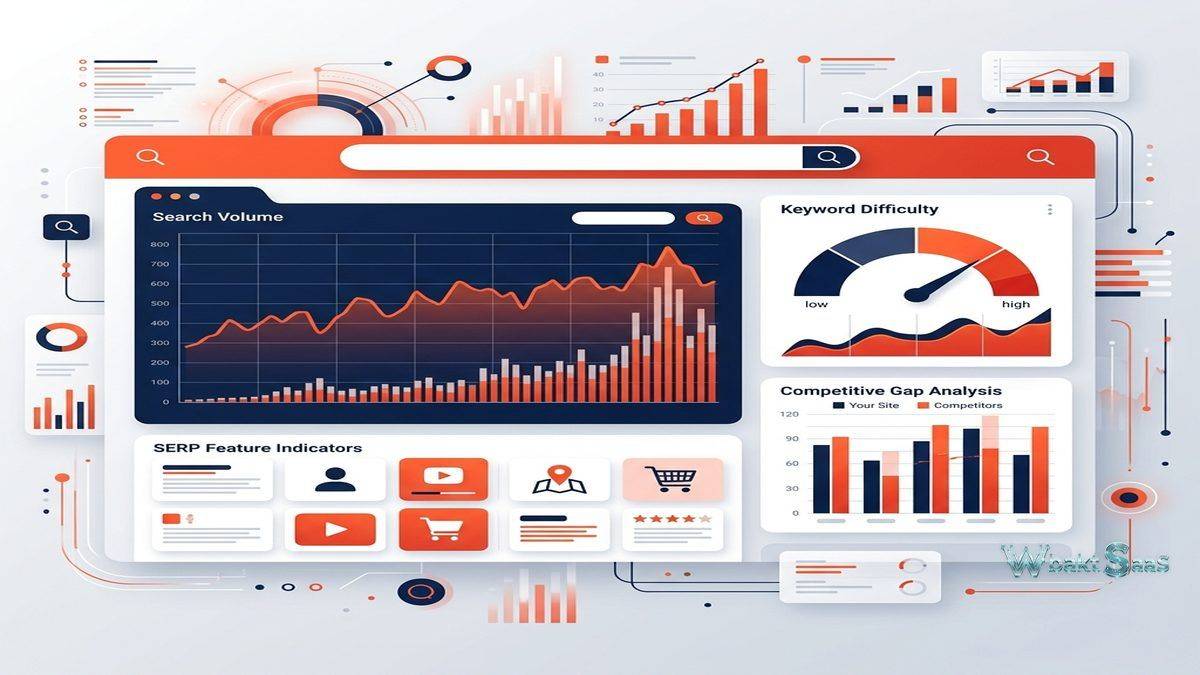
SEMrush’s Keyword Magic Tool provides access to an extensive keyword database spanning billions of keywords across global and local search markets. Users enter seed keywords and receive comprehensive lists of related terms organized by topic groups, with metrics including monthly search volume, keyword difficulty score, cost-per-click estimates, competitive density, SERP features present, and search intent classification (informational, navigational, commercial, transactional).
Keyword difficulty scoring estimates how challenging it would be to rank on the first page for a given keyword, based on the authority and backlink profiles of currently ranking pages. This metric helps marketers prioritize keywords where they have a realistic chance of achieving visibility rather than pursuing highly competitive terms where established authority sites dominate the results. The intent classification categorizes keywords by the type of content searchers expect — informational queries seek knowledge, navigational queries seek specific websites, commercial queries indicate research before purchase, and transactional queries indicate immediate purchase readiness — enabling content strategy alignment with searcher expectations at each stage of the buying journey.
Keyword Overview provides in-depth analysis of individual keywords including global and country-specific search volumes, trend graphs showing seasonal variation, SERP analysis revealing which pages currently rank and their domain authority levels, related keywords, phrase match variations, and question-format keywords that people search. This comprehensive keyword intelligence enables marketers to evaluate keyword opportunities from multiple angles before committing content creation resources.
The Keyword Gap tool compares keyword portfolios between domains, revealing keywords that competitors rank for but the analyzed domain does not. This competitive gap analysis identifies content opportunities where competitors have established visibility that the organization has not yet pursued. Conversely, the tool shows keywords where the organization ranks but competitors do not, identifying competitive advantages to protect and strengthen.
Site Audit
SEMrush’s Site Audit crawls websites to identify technical SEO issues that may impair search engine visibility. The crawler examines hundreds of on-page and technical factors including broken links, redirect chains, missing meta tags, duplicate content, slow-loading pages, mobile usability issues, structured data errors, canonicalization problems, and crawlability barriers. Issues are categorized by severity — errors (critical problems requiring immediate attention), warnings (important issues that should be addressed), and notices (optimization opportunities that could improve performance).
The thematic organization groups related issues into categories: crawlability, HTTPS implementation, international SEO, performance, internal linking, and markup. This organization helps technical SEO teams systematically address issues by category rather than confronting an overwhelming flat list of individual problems. Progress tracking compares audit results over time, confirming that resolved issues remain fixed and new issues are identified promptly.
Core Web Vitals integration measures Largest Contentful Paint (loading performance), First Input Delay (interactivity responsiveness), and Cumulative Layout Shift (visual stability) — the critical page experience signals that Google uses as ranking factors. Pages failing Core Web Vitals thresholds are flagged with specific performance bottlenecks identified, helping development teams prioritize performance optimizations that directly impact both user experience and search visibility.

Competitive Analysis
Domain Overview provides a comprehensive competitive intelligence snapshot for any domain: organic search traffic estimates, paid search traffic estimates, backlink profile summary, top organic keywords, top paid keywords, main organic competitors, and traffic trend visualization. This overview enables rapid competitive assessment — understanding a competitor’s digital presence in minutes rather than the hours or days that manual research would require.
Traffic Analytics estimates website traffic volume, traffic sources, geographic distribution, top pages, and audience overlap between competitors. While these estimates are approximations rather than exact measurements, they provide directional intelligence about competitor performance trends, content strategy focus areas, and market positioning that would otherwise be invisible without access to competitors’ own analytics data.
Organic Research reveals which keywords drive organic traffic to competitor domains, which pages rank for the most keywords, and how organic visibility has changed over time. This intelligence informs content strategy by identifying successful competitor content that the organization can learn from, topic areas where competitors have established authority, and emerging keyword opportunities that competitors have begun targeting.
Backlink Analysis
SEMrush’s Backlink Analytics examines the link profiles of any domain, revealing referring domains, anchor text distribution, link types (text, image, form, frame), follow/nofollow ratio, and new/lost link trends. Link profile analysis helps organizations understand their own backlink health and identify opportunities to strengthen their link portfolio through outreach, content marketing, and digital PR.
The Backlink Gap tool compares backlink profiles across multiple domains, identifying websites that link to competitors but not to the analyzed domain. These gap sites represent outreach opportunities — if a website links to multiple competitors, it may also be willing to link to the organization’s relevant content. This targeted outreach approach is more efficient than untargeted link building because it focuses on websites with demonstrated willingness to link to content in the relevant topic area.
The Link Building Tool provides workflow management for outreach campaigns, tracking prospects, outreach status, and acquired links. Toxic backlink identification flags potentially harmful links from low-quality or spammy sources that could negatively impact search rankings, and the Disavow Tool generates the necessary files for submitting disavow requests to Google Search Console.
Content Marketing Toolkit
The SEO Content Template generates content briefs based on competitive analysis of top-ranking pages for target keywords. Templates include recommended word count, readability targets, semantically related keywords to include, suggested heading structures, and backlink targets based on what currently ranking content demonstrates. These data-driven briefs provide content creators with evidence-based guidance rather than subjective editorial opinions about what content should contain.
The SEO Writing Assistant provides real-time content optimization feedback as writers create content. Integration with Google Docs and WordPress enables optimization guidance within the writing environment, checking readability, SEO recommendations, originality, and tone of voice against target specifications. This real-time feedback loop helps writers produce search-optimized content without requiring separate optimization review after drafting.
Topic Research discovers content ideas and popular questions around seed topics, organized into topic cards showing headlines, related questions, and subtopics. Content Audit evaluates existing website content performance, identifying pages that need updating, consolidation, or removal based on traffic, engagement, and ranking data. This content lifecycle management ensures that existing content assets are maintained and optimized alongside new content creation.
Position Tracking
Position Tracking monitors daily ranking positions for target keywords across specified geographic locations and devices. Ranking visibility trends reveal whether SEO efforts are improving overall search presence. Competitor tracking shows how competitor rankings change alongside the organization’s own positions, providing context for ranking movements — a ranking drop is less concerning if all competitors experienced similar declines, suggesting an algorithm change rather than a site-specific issue.
SERP feature tracking monitors whether the organization appears in featured snippets, People Also Ask boxes, local packs, image carousels, and other special search result formats. These SERP features increasingly determine click-through rates, making their tracking essential for understanding actual search visibility beyond traditional position rankings.
PPC and Advertising Tools
SEMrush’s advertising toolkit includes Advertising Research (analyzing competitor paid search strategies), PLA Research (competitive intelligence for Google Shopping campaigns), and Ad Builder for creating ad copy. The PPC Keyword Tool helps build and organize keyword lists for paid campaigns, with negative keyword management and cross-group negatives that prevent internal keyword competition between campaign ad groups.
Local SEO
SEMrush’s Listing Management tool distributes business information to online directories, ensuring consistent Name, Address, and Phone (NAP) data across Google Business Profile, Yelp, Facebook, Apple Maps, and dozens of industry-specific directories. Inconsistent business information across directories confuses both search engines and potential customers, negatively impacting local search rankings and business credibility. The listing management tool monitors these directories continuously, alerting businesses when information becomes inconsistent and enabling corrections from a single dashboard.
Map Rank Tracker monitors local pack rankings across geographic grids, showing how a business’s visibility varies by location within its service area. A restaurant might rank in the local 3-pack for searchers within one mile but not for searchers three miles away. Understanding these geographic ranking patterns helps local businesses optimize their local SEO strategy and identify areas where their visibility needs improvement.
Social Media Management
SEMrush’s Social Media Toolkit includes posting, scheduling, and analytics for Facebook, Instagram, Twitter, LinkedIn, Pinterest, and Google Business Profile. The Social Media Poster schedules content across platforms from a unified calendar view, maintaining consistent publishing schedules without requiring separate platform logins. Social Media Analytics tracks follower growth, engagement rates, post performance, and audience demographics across connected accounts.
Social Media Tracker monitors competitor social profiles, comparing follower growth, posting frequency, engagement rates, and content types. This competitive intelligence reveals which content formats and posting strategies perform best in the organization’s industry, informing social media strategy with evidence rather than guesswork. While these social tools provide useful capability within the SEMrush ecosystem, organizations with sophisticated social media operations may find that dedicated social platforms offer greater depth in scheduling, community management, and social listening.
Reporting and Dashboards
My Reports provides a drag-and-drop report builder that assembles data from across SEMrush tools into branded, presentable reports. White-label reporting removes SEMrush branding and applies the organization’s own branding — essential for agencies delivering client reports. Scheduled report delivery automates recurring report generation and email distribution, ensuring that stakeholders receive regular performance updates without manual report compilation.
Report templates cover common reporting needs including monthly SEO performance, competitive analysis summaries, PPC campaign reports, and social media performance overviews. Custom dashboards aggregate real-time data from multiple tools into at-a-glance monitoring views that marketing managers can check daily without generating full reports.
Common Use Cases
SEO Teams: SEO professionals use SEMrush for keyword research, technical auditing, rank tracking, backlink analysis, and competitive intelligence — the core activities of search engine optimization. The consolidated platform eliminates the need for separate subscriptions to keyword tools, rank trackers, crawlers, and backlink analyzers.
Content Marketing: Content teams leverage topic research, SEO content templates, and the writing assistant to create search-optimized content. Content audits identify existing pages that need updating, consolidation, or removal. The content workflow from research through creation through optimization through performance tracking operates within a single platform.
Digital Marketing Agencies: Agencies use SEMrush to manage SEO and marketing campaigns for multiple clients. White-label reporting, client management features, and multi-project organization support the agency workflow of delivering marketing services across a diverse client portfolio. The Agency Growth Kit add-on provides CRM-like features for agency business development.
PPC Management: Paid search managers use competitive advertising research to understand competitor strategies, the PPC keyword tool to build optimized campaign structures, and ad copy analysis to improve creative performance. Cross-referencing organic and paid keyword data reveals opportunities to optimize budget allocation between paid and organic channels.
E-commerce SEO: Online retailers use SEMrush for product page optimization, competitor product analysis, Google Shopping intelligence, and technical SEO auditing tailored to e-commerce site architectures with large product catalogs and faceted navigation structures.
Pricing
SEMrush pricing follows three main tiers: Pro (for freelancers and small teams), Guru (for growing marketing teams), and Business (for large enterprises and agencies). Each tier progressively increases limits on projects, keywords tracked, results per report, historical data access, and user seats. Add-on tools including Trends, Agency Growth Kit, and ImpactHero are available at additional cost.
Pricing and features are subject to change. Please verify current plan details on the official SEMrush website before making purchasing decisions.
Limitations
- Data accuracy: Traffic estimates, keyword volumes, and competitive metrics are approximations based on modeling and sampling. Organizations should treat SEMrush data as directional intelligence rather than exact measurements.
- Cost: Professional-tier pricing places SEMrush beyond the budget of many small businesses and individual practitioners, particularly when multiple user seats or add-on tools are needed.
- Learning curve: The platform’s 55+ tools create a substantial learning curve. New users may feel overwhelmed by the breadth of capabilities and require time to identify which tools serve their specific needs.
- Usage limits: Daily report limits, keyword tracking caps, and crawl page limits on lower tiers can restrict power users who need high-volume research capabilities.
- Social media depth: While SEMrush includes social media management tools, dedicated social platforms like Hootsuite or Sprout Social provide deeper social-specific functionality.
Summary
SEMrush provides one of the most comprehensive digital marketing intelligence platforms available, combining SEO research, competitive analysis, content optimization, PPC intelligence, and social media tools into a unified toolkit. Its breadth is both its primary strength and its potential weakness — the platform covers most digital marketing needs but may not match the depth of specialized tools in every category. The SEMrush API provides programmatic access to the platform’s data for custom integrations, automated reporting, and data pipeline construction, serving organizations with technical capabilities that want to incorporate SEMrush intelligence into their proprietary systems and dashboards.
The platform’s continuous expansion through acquisitions and feature development has created an increasingly comprehensive ecosystem. The App Center provides third-party tools that extend SEMrush’s capabilities into adjacent areas including AI writing assistance, stock photography, and advanced analytics. This ecosystem approach positions SEMrush not just as a tool but as a marketing intelligence platform that organizations can customize through app selection to match their specific operational needs.
Digital marketing toolkits including SEMrush, Ahrefs, Moz, Ubersuggest, and SpyFu each approach marketing intelligence with different feature priorities. SEMrush’s advantages center on platform breadth, competitive intelligence depth, and content marketing integration. Organizations evaluating marketing toolkits should consider which specific capabilities are most important to their strategy and whether a consolidated platform or best-of-breed specialized tools better serve their marketing intelligence needs.
Features, pricing, and availability discussed in this review reflect information available at the time of writing. Software products evolve continuously, and details may have changed since publication. Please verify current information directly on the official SEMrush website. WBAKT SaaS is an independent review platform with no affiliate relationships with any software company mentioned in this article.
For related marketing tools, see our reviews of Ahrefs SEO platform, Google Analytics 4, and Moz SEO toolkit.
About the Author